










What's Happening?
Italy, a country situated in south-central Europe, is renowned for its picturesque landscapes and rich cultural heritage. As described by the Oxford Learners Dictionary, it is a nation with significant geographical and historical importance. The country is a popular
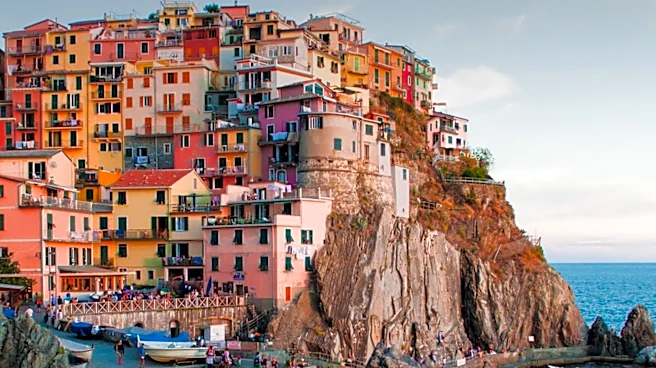
tourist destination, with Hertz offering car rental services to accommodate visitors exploring its various regions. However, Italy is also currently experiencing environmental challenges, as indicated by Incendioggi's live map, which shows active wildfires in several areas. One of Italy's most famous tourist spots, the Amalfi Coast, faces issues of overcrowding during peak seasons, a situation reported by DW. Historically, Italian cities like Ancona, Trieste, Otranto, and Brindisi have been documented in collections such as the David Rumsey Historical Map Collection, highlighting their long-standing significance.
Why It's Important?
Italy's status as a major European nation impacts various sectors, including global tourism and environmental conservation. Its cultural heritage draws millions of visitors annually, contributing significantly to its economy and the broader European tourism industry. The challenges of managing popular tourist destinations like the Amalfi Coast highlight the ongoing global debate about sustainable tourism and the balance between economic benefits and environmental preservation. Furthermore, the presence of active wildfires underscores the increasing vulnerability of European countries to climate-related disasters, which can have severe ecological and economic consequences. The historical mapping of Italian cities also provides valuable insights into urban development and geopolitical shifts over centuries, contributing to academic and historical understanding.
What's Next?
For Italy, addressing the challenges of over-tourism and environmental concerns will likely be a continuous effort. Local authorities and national agencies may implement new strategies to manage tourist flows, particularly in highly visited areas like the Amalfi Coast, potentially involving visitor quotas or improved public transportation. Efforts to combat wildfires will likely continue, with increased focus on prevention, early detection, and rapid response mechanisms, especially as climate change may exacerbate such events. The ongoing preservation and study of Italy's cultural and historical sites will also remain a priority, ensuring that its rich heritage is maintained for future generations and continues to attract global interest.
Beyond the Headlines
Beyond the immediate news, Italy's situation reflects broader global trends. The tension between economic development through tourism and the imperative of environmental protection is a universal challenge. The country's experience with wildfires is a stark reminder of the interconnectedness of climate change and local ecosystems, prompting deeper discussions on international cooperation for climate resilience. Moreover, Italy's enduring cultural influence, from its cuisine to its art and architecture, continues to shape global perceptions and cultural exchanges. The historical documentation of its cities also serves as a testament to human civilization's evolution, offering lessons in urban planning, trade, and societal development that resonate far beyond its borders.