






What's Happening?
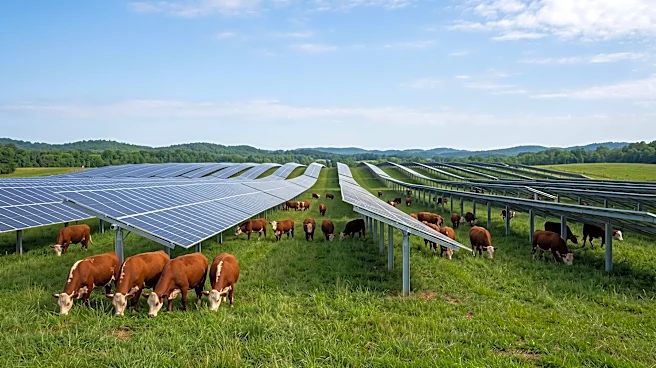
A solar farm in Christiana, Tennessee, operated by Silicon Ranch, has launched its patented CattleTracker system, allowing cattle to graze beneath adjustable solar panels. This 40-acre site is testing the commercial viability of agrivoltaics, a practice
where land is used for both agriculture and solar energy generation. Ten cows and their calves are part of this pilot program. The system utilizes a specially designed 'grazing mode' that limits the panel tilt to ensure safe clearance for the livestock. This mode keeps panels within 20 degrees of parallel to the ground, a narrower range than their normal sun-tracking operation. Workers periodically move the herd between smaller grazing areas, or paddocks, allowing other sections of the farm to continue normal solar tracking. This initiative aims to demonstrate that agricultural productivity can coexist with renewable power generation, addressing challenges such as structural strength, panel height, construction costs, maintenance, durability, and energy production while meeting animal welfare needs. The electricity generated at the Christiana site is supplied to Middle Tennessee Electric (MTE) under an exclusive purchasing agreement, projected to produce approximately 7,200 megawatt-hours annually, enough to power about 500 homes.
Why It's Important?
This project is significant as it represents a commercial test of agrivoltaics, a concept that could revolutionize land use in the U.S. by integrating solar energy production with agricultural practices. Historically, solar farms have often displaced agricultural land, leading to concerns about food security and rural economies. By demonstrating that cattle can safely and effectively graze beneath solar panels, Silicon Ranch's initiative offers a model for maximizing land utility. The 'grazing mode' technology addresses a key challenge: accommodating larger livestock like cattle, which typically require taller installations than sheep for solar grazing. If successful, this approach could reduce the need for extensive land acquisition for solar projects, mitigating conflicts between energy development and farming. Furthermore, the environmental benefits, such as reduced mowing and herbicide use, improved water infiltration, increased vegetation and biodiversity, and greater carbon storage, could offer a more sustainable model for both energy and agriculture. For electricity customers, the agreement with MTE suggests potential for stable and lower wholesale power costs, contributing to energy affordability.
What's Next?
The Christiana solar farm will continue its commercial test of the CattleTracker system, with ecological and animal-welfare fieldwork scheduled through 2028. The success of this project will be measured by its ability to demonstrate the viability of co-locating energy and agriculture, balancing energy production with farming and ecological performance. If proven effective, this model could lead to wider adoption of agrivoltaics across the U.S., particularly in regions where land is at a premium or where there is a strong desire to preserve agricultural land. Major stakeholders, including other solar developers, agricultural organizations like the American Farmland Trust, and utility companies, will closely monitor the outcomes. The American Farmland Trust advocates for designing farming into these projects from the outset, suggesting that successful demonstrations like this could influence future solar development policies and practices. The project's ability to provide a blueprint for sustainable land use could also encourage policy incentives for agrivoltaic systems, potentially opening new avenues for farmers to generate additional income through grazing contracts on solar sites.
Beyond the Headlines
The integration of cattle grazing with solar farms through technologies like 'grazing mode' touches upon deeper implications for sustainable development and the future of rural landscapes in the U.S. This approach challenges the traditional dichotomy between industrial development and environmental preservation, proposing a synergistic model where both can thrive. Ethically, it raises questions about animal welfare in novel environments, which the ongoing fieldwork aims to address. Legally, it could influence zoning laws and land-use regulations, potentially creating new categories for 'agrivoltaic' land use that balance energy production with agricultural output. Culturally, it could shift public perception of renewable energy projects, making them more palatable to rural communities by demonstrating their compatibility with traditional farming practices. In the long term, widespread adoption of agrivoltaics could contribute to a more resilient food and energy system, reducing reliance on single-purpose land use and fostering greater ecological balance. It also highlights a broader trend towards innovative solutions that address climate change while supporting economic and social well-being, potentially leading to new research and development in integrated land management.