



What's Happening?
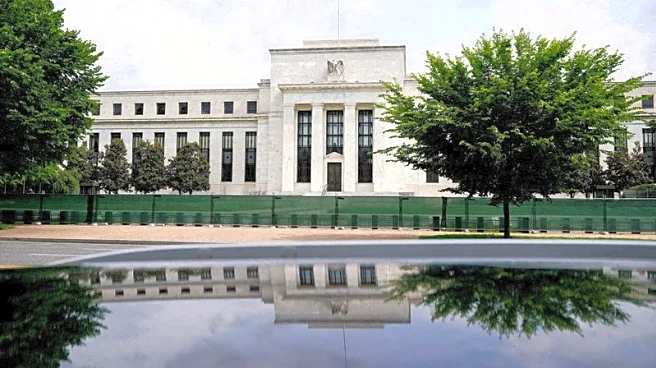
Kevin Hassett, a top economic adviser to President Donald Trump, has publicly criticized researchers from the New York Federal Reserve for their paper suggesting that the costs of tariffs are primarily borne by Americans. In a CNBC interview, Hassett described
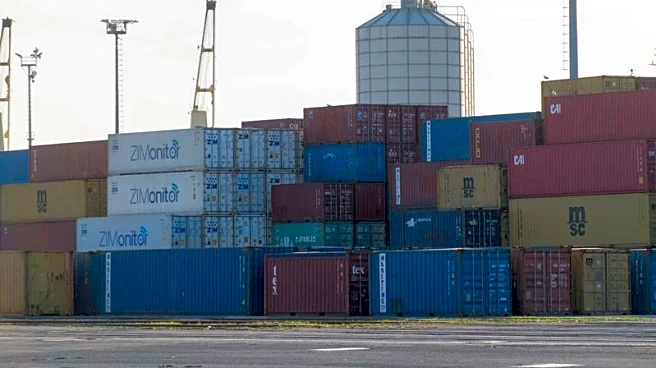
the paper as an 'embarrassment' and suggested that those involved should be disciplined for what he termed as 'shoddy scholarship.' The paper challenges the Trump administration's stance that tariffs primarily impact foreign entities, instead arguing that the financial burden falls on U.S. consumers and businesses. This research has sparked significant debate, as it contradicts the administration's long-held position on the economic impact of tariffs.
Why It's Important?
The criticism from Hassett highlights the ongoing debate over the economic impact of tariffs, a key component of President Trump's trade policy. The New York Fed's findings suggest that tariffs may not be as beneficial to the U.S. economy as the administration claims, potentially affecting public perception and policy decisions. If the research is accurate, it could imply that American consumers and businesses are facing higher costs, which could influence future trade negotiations and economic strategies. The controversy also underscores the tension between economic research institutions and government officials, particularly when findings challenge official narratives.
What's Next?
The New York Fed has not yet responded to Hassett's comments, but the situation may prompt further scrutiny of the research and its implications. If the findings gain traction, they could lead to increased pressure on the administration to reconsider its tariff policies. Additionally, the academic community may rally in defense of the researchers, potentially leading to broader discussions about the role of economic research in shaping public policy. The outcome of this debate could influence future trade policies and the administration's approach to international economic relations.