
What's Happening?
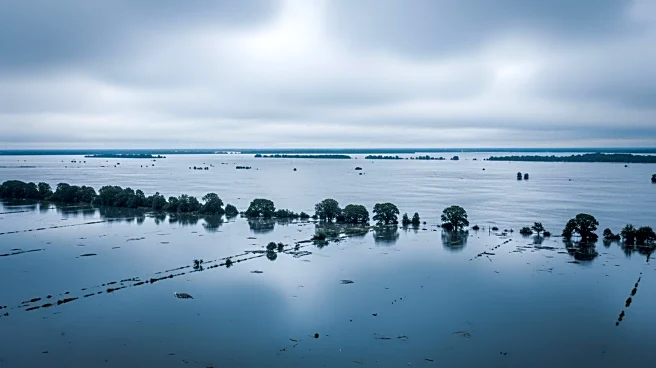
Recent research has revealed that climate change significantly intensified the devastating floods that occurred across South and Southeast Asia, resulting in over 1,600 fatalities. The region was hit by
a series of tropical cyclones, including Cyclones Ditwah and Senyar, which caused extensive damage to infrastructure, homes, and agriculture, leading to losses estimated at $20 billion. The study, conducted by World Weather Attribution, highlighted that warmer Indian Ocean waters, approximately 0.2°C above the long-term seasonal average, contributed to the severity of these storms by providing additional heat and moisture. The research also noted that human-induced climate change has likely increased the frequency and intensity of extreme rainfall events, exacerbating the impact of these natural disasters.
Why It's Important?
The findings underscore the growing threat of climate change to global stability, particularly in regions like Asia that are vulnerable to extreme weather events. The economic impact is profound, as the floods have disrupted local economies, damaged infrastructure, and affected livelihoods. This situation poses a significant challenge for insurers and financial institutions that rely on climate models to assess risk, as these models have struggled to accurately predict the pace and impact of climate change. The increased frequency of such events could lead to higher insurance premiums and financial instability in affected regions, highlighting the urgent need for improved climate resilience and adaptation strategies.
What's Next?
In response to these findings, there may be increased pressure on governments and international organizations to enhance climate adaptation measures and invest in infrastructure that can withstand extreme weather events. Policymakers might also focus on reducing greenhouse gas emissions to mitigate future climate risks. Additionally, financial institutions may need to refine their risk assessment models to better account for the unpredictable nature of climate change, ensuring that they can provide adequate coverage and support to affected regions.
Beyond the Headlines
The study highlights the ethical and social dimensions of climate change, as the most vulnerable populations often bear the brunt of its impacts. The floods in Asia have not only caused immediate physical and economic damage but also long-term social and cultural disruptions. Communities may face challenges in rebuilding and recovering, with potential implications for migration patterns and regional stability. This situation calls for a comprehensive approach to climate policy that addresses both mitigation and adaptation, ensuring that vulnerable populations are supported and protected.