







What's Happening?
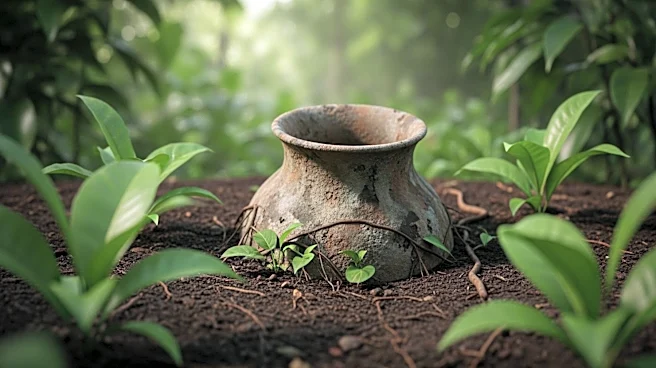
Recent archaeological digs along the BR-156 highway in Brazil's northern state of Amapa have uncovered significant artifacts that provide insights into the region's pre-colonial history. These findings include pottery vases, potentially funerary urns,
and small artifacts resembling human faces. The discoveries suggest that the Amazon was not a human desert but a landscape shaped by interconnected societies long before European colonization. The artifacts, cleaned and analyzed by the National Department of Transport Infrastructure, reveal a timeline of human presence, with items from Portuguese occupation found in upper soil layers and Indigenous pottery in deeper layers. The site, known as the Archaeological Park of the Solstice, features a 1,000-year-old stone monument dubbed the 'Stonehenge of the Amazon,' which aligns with the winter solstice sun rise. This site, along with others, highlights the sophisticated societal structures and sustainable practices of ancient Indigenous peoples.
Why It's Important?
These archaeological findings are crucial for understanding the historical and cultural dynamics of the Amazon region. They challenge the narrative of the Amazon as an untouched wilderness, instead revealing a complex network of Indigenous societies that managed and cultivated the landscape sustainably. This knowledge not only enriches historical understanding but also informs current conservation efforts, emphasizing the importance of protecting these sites and the surrounding rainforest. The discoveries underscore the need for permanent protection measures and could influence policies regarding land use and development in the Amazon. Additionally, the insights gained from these sites contribute to broader discussions on Indigenous rights and heritage preservation, highlighting the enduring legacy of these communities.
What's Next?
The artifacts from the digs will be added to Amapa's state collection, which includes over 530,000 pieces, some dating back 6,140 years. The Archaeological Park of the Solstice is undergoing the process to become a national park, which will increase public access and awareness. This transition could lead to more comprehensive protection measures for the site and its surroundings. Researchers will continue to explore the region, using advanced technologies like satellite scans to uncover more hidden archaeological sites. These efforts may reveal further connections between ancient settlements, providing a deeper understanding of the region's historical landscape and influencing future archaeological and ecological research.
Beyond the Headlines
The discoveries in the Amazon have broader implications for how societies understand technology and environmental management. The sophisticated design and construction of artifacts and monuments by Indigenous peoples demonstrate advanced technological capabilities that challenge modern perceptions of technology. These findings also highlight the importance of integrating Indigenous knowledge into contemporary environmental practices, offering lessons in sustainable land management and conservation. As the Amazon faces ongoing threats from deforestation and development, these insights could play a critical role in shaping future policies and strategies for preserving the region's ecological and cultural heritage.