



What's Happening?
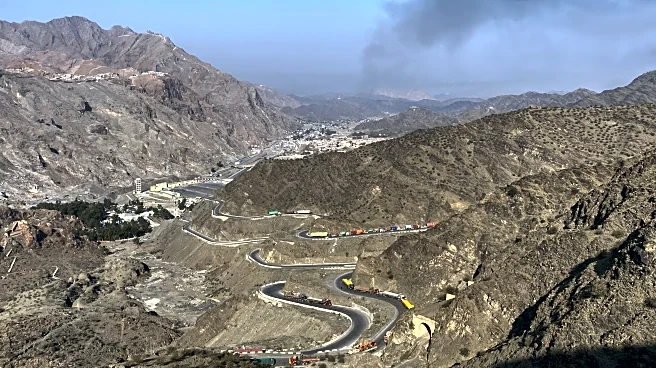
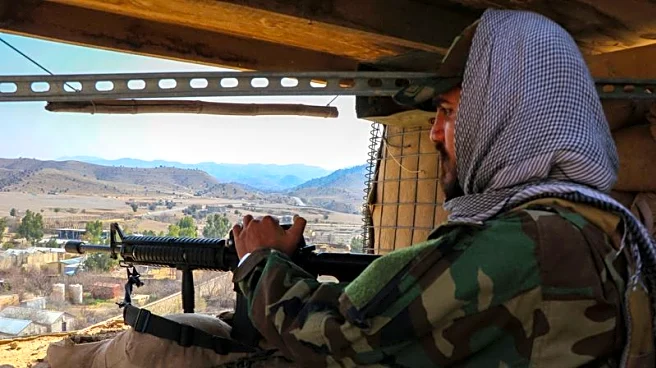
The United States has expressed support for Pakistan's right to defend itself following a series of military strikes on Afghan territory. This development comes amid escalating tensions between Pakistan and Afghanistan, with Pakistan accusing the Afghan Taliban
government of harboring militant groups that conduct cross-border attacks. The Pakistani defense minister declared an 'open war' with Afghanistan, citing a lack of patience in Islamabad. The recent military actions by Pakistan targeted several Afghan cities, including Kabul and Kandahar, in response to Afghan forces attacking Pakistani border troops. The international community, including the UK and EU, has called for de-escalation and a return to diplomatic negotiations.
Why It's Important?
The situation is significant as it highlights the fragile security dynamics in South Asia, particularly between Pakistan and Afghanistan. The U.S. backing of Pakistan underscores the geopolitical alliances and the complex relationship between these nations. The conflict has the potential to destabilize the region further, affecting international relations and security. The involvement of major powers like the U.S. and the EU in calling for peace reflects the global concern over the potential for broader conflict. The situation also impacts regional economic stability and humanitarian conditions, with civilian casualties reported.
What's Next?
The international community is likely to continue diplomatic efforts to mediate between Pakistan and Afghanistan. The U.S. and other global powers may increase pressure on both nations to engage in dialogue and cease hostilities. The potential for further military escalation remains if diplomatic efforts fail. Monitoring by international bodies and potential sanctions or interventions could be considered if the situation deteriorates. The role of regional players, such as India and China, may also influence future developments.