









What's Happening?
Germany is significantly increasing security measures at its military bases due to growing concerns about potential Russian espionage and sabotage threats. Lieutenant General Alexander Sollfrank, who commands the Bundeswehr’s Joint Operational Command,
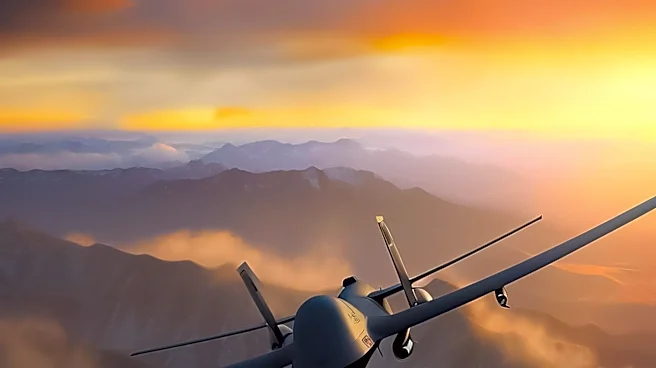
announced these heightened precautions. The measures are also part of a broader effort to prepare German military sites for a more central role in defending NATO’s eastern flank. Sollfrank stated that protective measures for military properties and installations within Germany would be expanded, specifically mentioning an increase in counter-drone capabilities. These actions come amid rising anxieties across Europe regarding the vulnerability of military installations, including American bases, which have reportedly been subjected to suspected drone surveillance operations.
Why It's Important?
The decision by Germany to bolster its military base security is critical for several reasons. It reflects a tangible response to the perceived escalation of threats from Russia, particularly in the realm of hybrid warfare, which includes espionage, sabotage, and drone surveillance. By enhancing counter-drone capabilities, Germany aims to protect sensitive military assets and operations from intelligence gathering and potential attacks. This move also underscores Germany's commitment to its role within NATO, especially in strengthening the alliance's eastern flank, which is directly exposed to Russian aggression. The security of these bases is paramount for the effective deployment and operation of NATO forces, ensuring readiness and deterrence against potential adversaries. The vulnerability of military installations across Europe, including those housing U.S. personnel, highlights a collective security challenge that requires robust and coordinated responses.
What's Next?
Germany is expected to implement a range of enhanced security protocols, including the deployment of advanced counter-drone systems, increased surveillance, and potentially more stringent access controls at military installations. This could involve investments in new technologies and training for personnel to detect and neutralize drone threats. Furthermore, these measures are likely to be coordinated with NATO allies to ensure a cohesive defense strategy across the alliance's eastern flank. Other European nations, facing similar threats, may follow suit, leading to a broader enhancement of military base security across the continent. The ongoing adaptation to hybrid threats will likely remain a priority for European defense establishments, with continuous evaluation and upgrading of security measures.
Beyond the Headlines
The increased focus on military base security in Germany and across Europe points to a significant shift in the nature of modern warfare and intelligence gathering. The proliferation of drone technology, even commercially available models, presents a low-cost, high-impact tool for adversaries to conduct surveillance or even sabotage. This necessitates a re-evaluation of traditional perimeter defense strategies and a greater emphasis on airspace security around critical military infrastructure. The concerns about Russian activities also highlight the ongoing geopolitical tensions and the need for constant vigilance against non-conventional threats. This situation underscores the importance of intelligence sharing and collaborative defense development among NATO members to counter evolving threats effectively, moving beyond conventional military preparedness to address a more complex and ambiguous threat landscape.