





What's Happening?
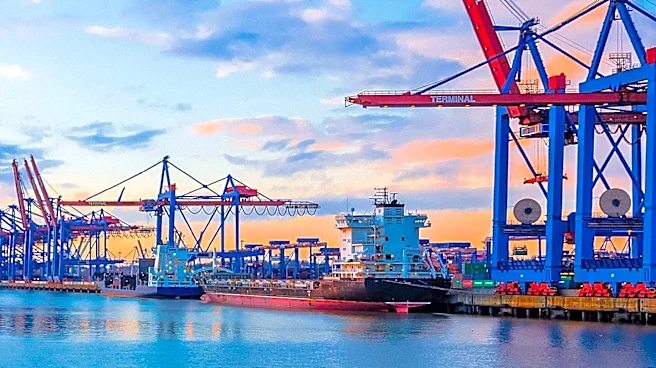
Hapag-Lloyd, a major global shipping company, is expanding its port terminal investments through its subsidiary, Hanseatic Global Terminals. The company has announced negotiations to increase its stake in the Eurogate Container Terminal Hamburg and the TC3
container terminal in Tangier Med, Morocco. The Hamburg terminal, a significant logistics hub in Northern Europe, currently has an annual capacity of 2.5 million TEU. Hapag-Lloyd plans to acquire a 20% stake in this terminal, aiming to enhance its capacity through modernization and automation. In Tangier, the company intends to double its stake from 10% to 20%, highlighting the port's strategic importance as a transshipment hub for vessels from Asia and across the Mediterranean. These moves are part of Hapag-Lloyd's broader strategy to expand its terminal portfolio to over 30 by 2030.
Why It's Important?
Hapag-Lloyd's investment in port terminals is significant for global trade and logistics, particularly in Europe and North Africa. By increasing its stake in key terminals, the company is positioning itself to better handle the growing demands of international shipping and logistics. The modernization and expansion of these terminals will likely lead to increased efficiency and capacity, benefiting global trade routes. For the Port of Hamburg, this investment underscores its role as a critical logistics hub in Europe, potentially attracting more business and boosting the local economy. Similarly, the expansion in Tangier Med enhances its status as a pivotal transshipment point, which could lead to increased trade flows through the Mediterranean. These developments are crucial for maintaining competitive shipping operations and meeting the evolving needs of global commerce.
What's Next?
As Hapag-Lloyd moves forward with its investment plans, the next steps will involve finalizing the terms of the stake acquisitions and beginning the planned expansions and modernizations. The company will likely focus on integrating advanced technologies to improve terminal operations, such as automation and digitalization. Stakeholders, including local port authorities and international shipping partners, will be closely monitoring these developments. The successful implementation of these projects could set a precedent for future investments in port infrastructure, potentially influencing other companies to follow suit. Additionally, the increased capacity and efficiency at these terminals may lead to shifts in global shipping routes, impacting logistics strategies for businesses worldwide.
Beyond the Headlines
The expansion of Hapag-Lloyd's terminal investments also raises questions about the environmental impact of increased shipping activities. As the company modernizes its facilities, there may be opportunities to incorporate sustainable practices, such as electrification of cargo handling and reducing carbon emissions. This could align with broader industry trends towards greener shipping solutions. Furthermore, the strategic importance of the Tangier Med port highlights the geopolitical significance of North African ports in global trade, potentially influencing regional economic development and international relations.