







What's Happening?
Following the confirmed discovery of the emerald ash borer (EAB) within Bismarck in August, the city's Forestry Division is initiating a comprehensive, long-term management plan. This plan aims to mitigate the impact of EAB on the city's boulevard tree
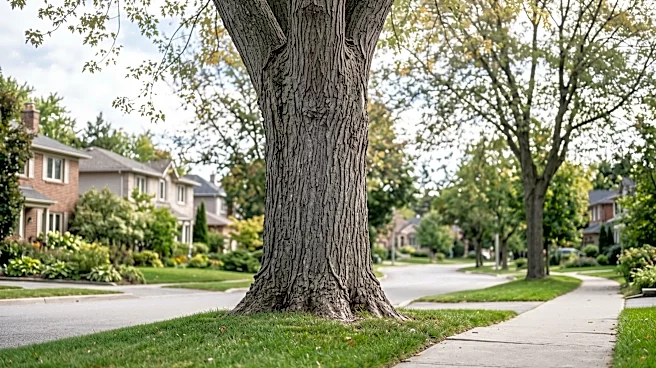
canopy. Over the next four to five years, approximately half of the boulevard ash tree population will be removed, with prioritization based on the trees' condition, structural integrity, and public safety concerns. The remaining boulevard ash trees will undergo insecticide treatment on a three-year cycle to preserve the tree canopy, slow tree loss, and allow for phased removals and replacements. City Forester Christy Ames Davis emphasized that Bismarck is well-prepared for this challenge due to years of preparation, allowing for a responsible management approach that combines treatment with gradual removals.
Why It's Important?
The implementation of this EAB management plan is crucial for maintaining Bismarck's urban forest health and ensuring public safety. Ash trees constitute a significant portion of the city's boulevard canopy, and an unchecked EAB infestation could lead to widespread tree mortality, posing risks from falling branches and trees. The phased removal approach is designed to spread the costs and workload over several years, preventing an overwhelming financial and logistical burden on the city. By combining removals with insecticide treatments, Bismarck aims to stagger tree loss, allowing time for replanting and the establishment of new, diverse tree species. This proactive strategy is vital for preserving the environmental benefits of the urban forest, such as air quality improvement, shade provision, and aesthetic value, which contribute to the overall quality of life for residents.
What's Next?
The Bismarck Forestry Division will proceed with the phased removal of boulevard ash trees, prioritizing those in poor condition or posing safety risks. Concurrently, insecticide treatments will be applied to the remaining ash trees on a three-year cycle. Residents are encouraged to contact the Forestry Division if they have concerns about boulevard ash trees near their property, as public input will help schedule inspections and inform decision-making at the neighborhood level. While a detailed replanting plan is still being finalized, the city is committed to replanting wherever space and infrastructure permit, with the goal of rebuilding a healthy and diverse urban forest. Additional information on replanting efforts will be shared as plans develop, ensuring transparency and community involvement in the long-term restoration of Bismarck's tree canopy.
Beyond the Headlines
The EAB infestation in Bismarck highlights a broader ecological challenge facing urban and natural forests across the U.S. The spread of invasive species like EAB can have profound environmental and economic consequences, necessitating significant public investment in management and mitigation. This situation underscores the importance of biodiversity in urban planning, as monocultures of tree species are highly vulnerable to species-specific pests. The city's long-term management plan, which includes both removal and replanting with diverse species, reflects a strategic shift towards creating more resilient urban ecosystems. This approach not only addresses the immediate threat of EAB but also contributes to a more sustainable urban environment, capable of withstanding future ecological challenges and providing long-term benefits to the community.