


What's Happening?
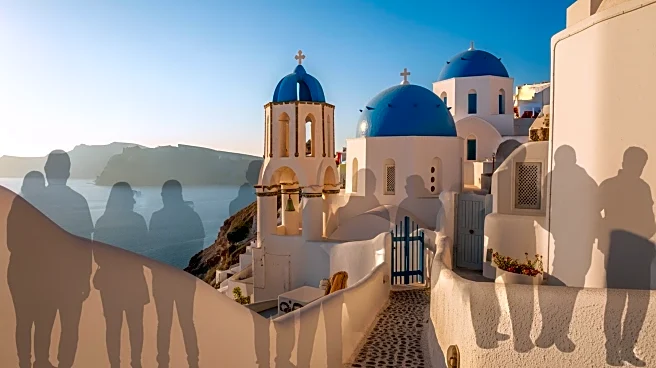
Santorini, a popular Greek island known for its stunning landscapes and sunsets, is grappling with the negative impacts of overtourism. The island, which has a permanent population of about 15,500, hosted approximately 3.4 million tourists in 2023, leading
to severe overcrowding and strain on local infrastructure. The influx of tourists, particularly from cruise ships, has resulted in congestion, pollution, and a decline in local culture. Despite efforts to manage the situation, such as imposing a cruise passenger tax and setting daily visitor limits, challenges persist, including illegal construction and rising property prices.
Why It's Important?
The situation in Santorini serves as a cautionary tale about the consequences of unchecked tourism growth. While tourism is a significant economic driver, generating around 1 billion euros annually, the benefits are unevenly distributed, and the environmental and social costs are mounting. The island's experience highlights the need for sustainable tourism practices that balance economic benefits with the preservation of local culture and environment. The crisis also underscores the importance of proactive governance and infrastructure planning to accommodate tourist demands without compromising the quality of life for residents.
What's Next?
In response to the overtourism crisis, Santorini authorities are considering further measures to control tourist numbers and protect the island's resources. These may include stricter regulations on short-term rentals and construction, as well as initiatives to promote off-season tourism. The recent seismic activity in early 2025, which led to a temporary decline in tourist numbers, has prompted a reevaluation of the island's tourism strategy. Moving forward, Santorini aims to shift towards a more sustainable tourism model that prioritizes high-value, low-impact visitors, ensuring the island's long-term viability as a tourist destination.