




What's Happening?
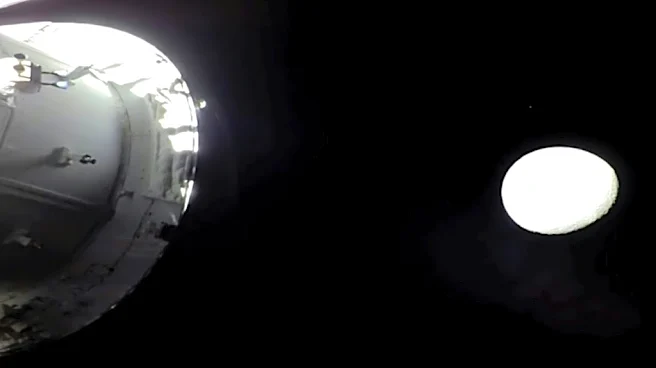
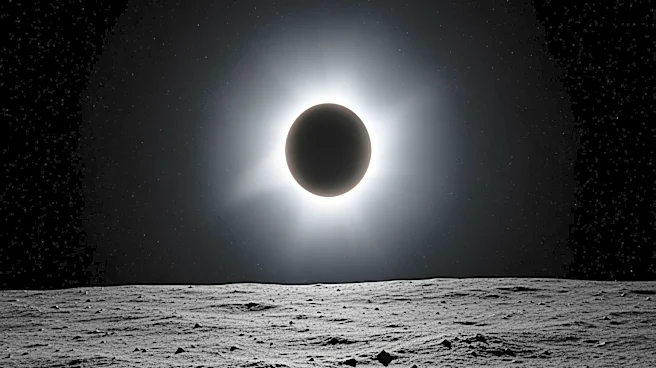
NASA's Artemis crew recently experienced a groundbreaking event by witnessing a total solar eclipse from space, marking the first time humans have observed such a phenomenon from behind the moon. This rare sight allowed the astronauts to view the solar corona
around a dark moon while in lunar orbit. The event occurred shortly after the crew observed 'Earthset' and 'Earthrise' and captured images of the moon's far side, some of which had never been seen by humans before. This celestial event is part of a series of upcoming total solar eclipses that will be visible from Earth over the next two years, offering multiple opportunities for skywatchers to experience totality.
Why It's Important?
The Artemis crew's observation of a total solar eclipse from lunar orbit is a significant milestone in space exploration, showcasing the capabilities of NASA's Artemis program and its potential to expand human understanding of celestial events. This achievement not only highlights the technological advancements in space travel but also sets the stage for future missions that could further explore and document astronomical phenomena from unique vantage points. The upcoming series of total solar eclipses presents a rare opportunity for scientists and enthusiasts alike to study and appreciate these events, potentially leading to new insights into solar and lunar dynamics.
What's Next?
As Earth prepares for a series of total solar eclipses, skywatchers and scientists are gearing up for these events, which will occur in August 2026, August 2027, and July 2028. These eclipses will provide opportunities for observation from various locations, including Europe, North Africa, and Australia. The next significant total solar eclipse visible in the U.S. will occur on March 30, 2033, with another major event, the 'Greatest American Eclipse,' expected on August 12, 2045. These future eclipses will offer further chances for scientific study and public engagement with celestial phenomena.