







What's Happening?
In Southwest Austin, a debate has emerged over the presence of wild elk, sparked by a sighting reported by Darren Smith in 2019. Smith claims to have seen an elk while driving on South MoPac Expressway, a claim met with skepticism by his peers. However,
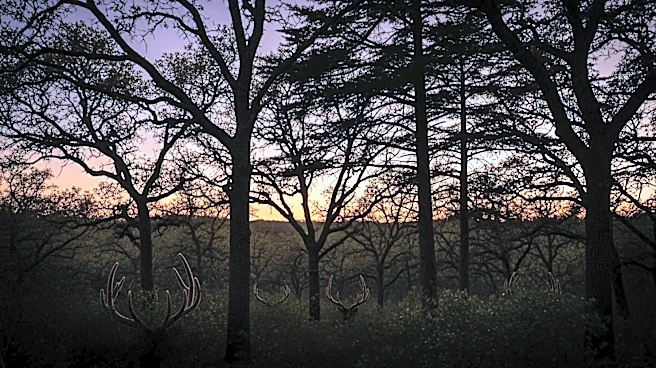
the presence of an elk crossing sign on State Highway 45 Southwest has fueled discussions, with some locals sharing stories of elk sightings in the area. The Texas Disposal Systems Exotic Game Ranch, known for housing exotic animals, is suggested as a possible source of these elk. Despite skepticism, evidence such as game camera footage and local anecdotes suggest that elk may indeed roam the area.
Why It's Important?
The potential presence of wild elk in Southwest Austin raises questions about wildlife management and the impact of exotic game ranches in Texas. If elk are indeed roaming freely, it could indicate gaps in containment measures at these ranches, leading to ecological implications for local wildlife. The situation also highlights the cultural fascination with wildlife in Texas, where exotic game ranches are a significant part of the hunting industry. Understanding the movement and management of such animals is crucial for balancing ecological integrity with economic interests in the region.
What's Next?
Further investigation and monitoring may be necessary to confirm the presence of elk in Southwest Austin. Local authorities and wildlife experts might consider conducting surveys or installing additional game cameras to gather more evidence. If confirmed, discussions on how to manage these elk, including potential impacts on local ecosystems and safety measures for drivers, could follow. The situation may also prompt a review of regulations governing exotic game ranches to prevent future escapes.
Beyond the Headlines
The debate over elk in Austin touches on broader themes of human-wildlife interaction and the ethics of exotic animal ranching. It raises questions about the responsibilities of ranch owners in preventing animal escapes and the potential consequences for native species. Additionally, it reflects the cultural significance of wildlife in Texas, where stories of elusive animals capture public imagination and contribute to local folklore.