



What's Happening?
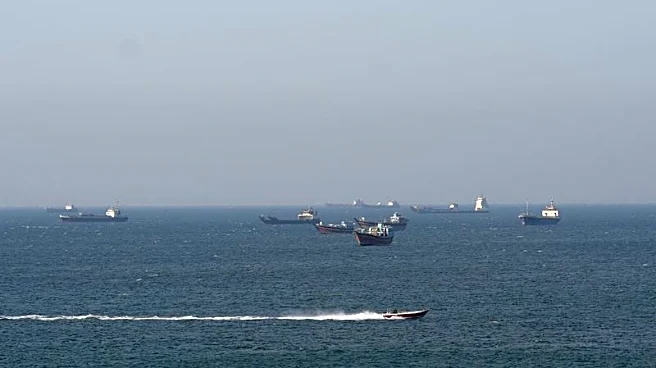
Iran has reversed its decision to reopen the Strait of Hormuz, firing on a tanker and a container ship attempting to pass through the waterway. This move comes amid a U.S. blockade of Iranian ports, which remains in place as part of ongoing tensions over
Iran's nuclear program. The closure of the strait, a critical chokepoint for global oil supplies, threatens to deepen the energy crisis and escalate tensions between Iran and the U.S. The situation has left numerous vessels stranded, with Iran asserting control over the strait's passage.
Why It's Important?
The Strait of Hormuz is a vital artery for global oil transportation, with significant implications for international energy markets. Its closure could lead to increased oil prices and supply disruptions, affecting economies worldwide. The standoff highlights the geopolitical tensions between Iran and the U.S., with potential consequences for regional stability and global security. The blockade and closure serve as strategic tools for both nations, with Iran using the strait as leverage in negotiations, while the U.S. maintains pressure on Iran's economy.
What's Next?
Diplomatic efforts are ongoing, with Pakistan mediating between the U.S. and Iran. A second round of negotiations is anticipated, with hopes of reaching a new agreement. The U.S. continues its blockade, while Iran insists on controlling the strait until the conflict is resolved. The international community is closely watching the situation, as further escalation could lead to broader conflict. The outcome of these negotiations will be crucial in shaping the future of U.S.-Iran relations and regional stability.