





What's Happening?
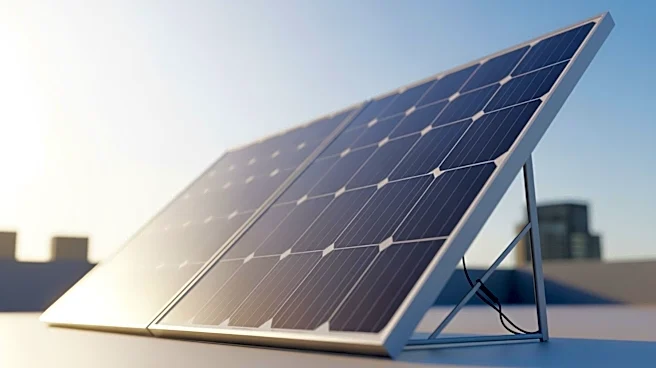
Germany has emerged as a leader in the adoption of plug-in solar technology, which is helping to mitigate the energy crisis exacerbated by geopolitical tensions in the Middle East. Plug-in solar systems, which can be installed on balconies and terraces,
offer a cost-effective alternative to traditional rooftop solar panels. These systems allow users to generate electricity directly through a mains socket, reducing reliance on fossil fuels. Germany's success in this area is attributed to government incentives, such as feed-in tariffs and the elimination of VAT, which have made solar power more accessible and affordable. The country has installed over one million plug-in solar systems between 2022 and 2025, contributing significantly to its energy independence.
Why It's Important?
The widespread adoption of plug-in solar technology in Germany is crucial as Europe faces an energy crisis driven by high gas prices and geopolitical instability. By reducing dependence on imported fossil fuels, plug-in solar systems can help stabilize energy prices and enhance energy security. This shift towards renewable energy sources is not only economically beneficial but also aligns with environmental goals, as it reduces carbon emissions. The success of Germany's plug-in solar initiative serves as a model for other European countries, highlighting the potential for clean energy solutions to address energy challenges and promote sustainability.
What's Next?
As Germany continues to lead in plug-in solar adoption, other European countries are beginning to follow suit. Legalization of plug-in solar systems across the EU, except in Sweden and Hungary, indicates a growing interest in this technology. Countries like Belgium and Spain are capitalizing on their favorable climates to expand solar energy use. The UK has recently lifted restrictions on plug-in solar, aiming to enhance energy security and reduce reliance on fossil fuels. These developments suggest a broader European shift towards renewable energy, with potential for significant economic and environmental benefits.
Beyond the Headlines
The adoption of plug-in solar technology in Europe represents a significant cultural and technological shift towards decentralized energy production. This trend empowers individuals and communities to take control of their energy consumption, fostering a sense of energy independence. Additionally, the move towards renewable energy sources like solar power is crucial for achieving climate neutrality goals. As technology advances and costs decrease, plug-in solar systems could play a pivotal role in transforming the energy landscape, promoting sustainability and resilience in the face of global energy challenges.