



What's Happening?
Geologists have uncovered evidence that ancient underwater canyons played a crucial role in preserving some of Earth's earliest complex life forms in South Australia's Flinders Ranges. Research led by Geologist Karol Faehnrich of Adelaide University,
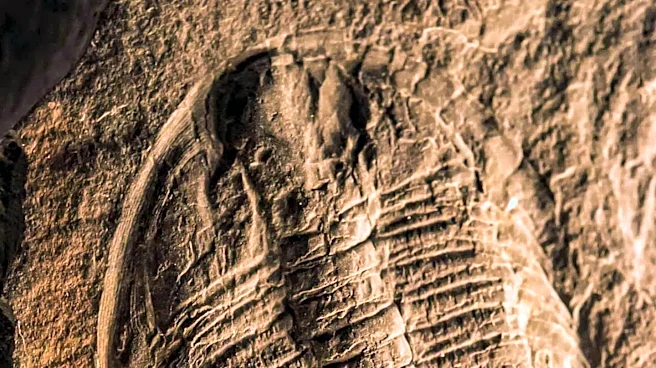
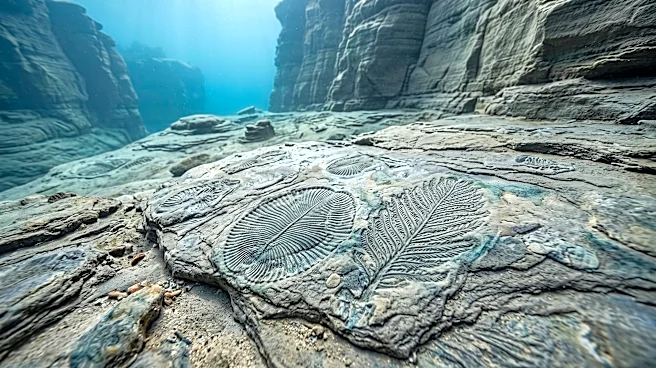
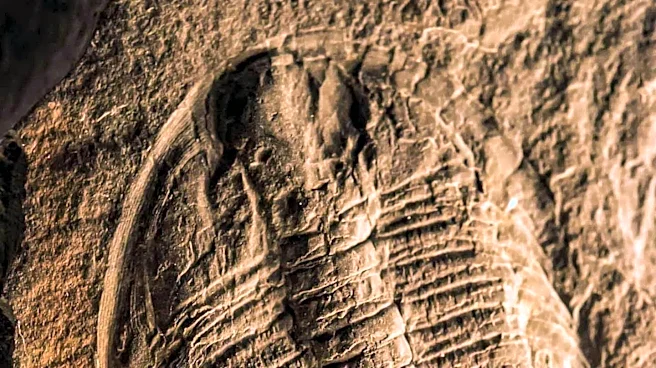
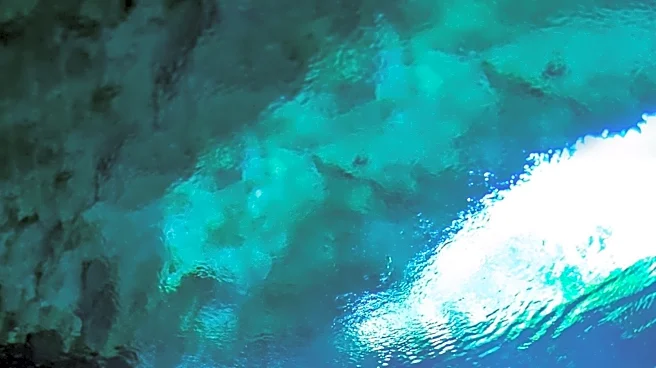
published in Earth and Planetary Science Letters, details how canyons up to 280 meters deep and over six kilometers wide were carved into the ancient continental shelf. These canyons were initially eroded by falling sea levels and powerful underwater currents. Subsequently, rising seas filled these massive geological features with sediment. This unique sequence of erosion and sedimentation created an environment conducive to the exceptional preservation of soft-bodied Ediacaran organisms, which lived more than half a billion years ago, predating the Cambrian explosion of animal diversity. The study involved tracing a boundary at the base of the Ediacara Member, a fossil-bearing part of the Rawnsley Quartzite, to reconstruct the buried landscape. The findings provide a detailed geological context for the rich fossil record found in the Flinders Ranges.
Why It's Important?
This discovery significantly advances our understanding of taphonomy, the study of how organisms decay and become fossilized, particularly for soft-bodied life forms that rarely leave a fossil record. The detailed geological reconstruction explains why the Flinders Ranges offer such an unusually rich and well-preserved view of the Ediacaran period, a critical time before the rapid diversification of animal life. By understanding the specific conditions—underwater canyon formation followed by sediment infilling—that led to this exceptional preservation, scientists can better interpret fossil records globally. This research provides a comparative framework for other Ediacaran fossil sites on different continents, potentially explaining why some locations yield richer records than others. It highlights that the geological history beneath the fossils is as crucial as the fossils themselves in understanding early life on Earth, offering new avenues for paleontological research and site comparison.
What's Next?
Researchers can now utilize the mapped canyon boundaries to conduct more targeted investigations across the Flinders Ranges. This will allow them to determine if the best-preserved fossils consistently appear within specific parts of the canyon fill sequence. Furthermore, this Australian case study provides a valuable model for comparison with Ediacaran fossil sites on other continents. Scientists will investigate whether similar geological events, such as the formation and infilling of underwater canyons, preceded exceptional fossil preservation elsewhere. This comparative approach could reveal global patterns in the conditions necessary for the fossilization of early complex life. Future studies will also likely focus on refining the timeline of sea-level changes during this pivotal period of early animal evolution by analyzing the sediment layers within the canyon fills, offering a more precise understanding of the environmental dynamics that shaped early Earth's biosphere.
Beyond the Headlines
The implications of this research extend beyond geology and paleontology, touching upon broader scientific methodologies and our perception of Earth's deep history. It underscores the interdisciplinary nature of scientific discovery, where geological processes directly influence biological preservation and our ability to reconstruct ancient ecosystems. The study also highlights the rarity and specificity of conditions required for soft-bodied organisms to fossilize, emphasizing that the fossil record is not a complete representation of past life but rather a selective snapshot dictated by geological fortune. This understanding can influence how scientists approach the search for early life, guiding them to look for specific geological signatures that indicate potential preservation sites. Ethically, it reinforces the importance of preserving unique geological sites like the Flinders Ranges, as they hold irreplaceable keys to understanding the origins and early evolution of complex life on our planet.