





What's Happening?
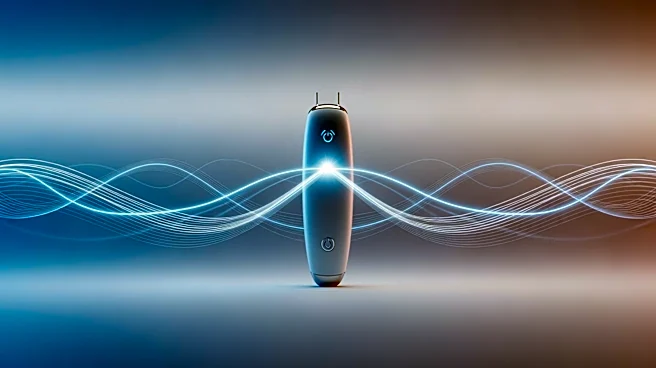
Nexalin Technology, Inc. has announced the publication of a peer-reviewed study in BMC Psychiatry, highlighting the effectiveness of its Deep Intracranial Frequency Stimulation (DIFS) technology. The study focused on female adolescents with non-suicidal
self-injury (NSSI) and reported statistically significant reductions in self-injury behaviors and depressive symptoms. The research involved six patients who underwent 21 days of 77.5 Hz, 15 mA stimulation using Nexalin's device. Improvements were noted in depressive symptoms and self-injury behaviors, with changes in brain-network activity and connectivity. The study found alterations in emotional-control networks, including Default, Limbic, Salience/Ventral Attention, and Control networks. Nexalin's Chief Medical Officer, David Owens, emphasized the importance of these findings in supporting the mechanism of Nexalin's neurostimulation approach.
Why It's Important?
The study's findings are significant as they provide evidence for a non-invasive, drug-free treatment option for mental health disorders, particularly in a challenging demographic. Nexalin's technology could offer a safer alternative to traditional treatments, which often involve medication with potential side effects. The ability to improve symptoms of depression and self-injury through neurostimulation could revolutionize mental health treatment, offering hope to patients who are resistant to conventional therapies. This development positions Nexalin as a leader in non-invasive neurostimulation, potentially expanding its market reach and influence in the mental health industry.
What's Next?
Nexalin plans to continue its research and development efforts, aiming to validate its findings through larger, randomized controlled trials. The company is focused on expanding the clinical applicability of its technology across multiple indications, including insomnia, depression, traumatic brain injury, PTSD, Alzheimer's disease, and ADHD. Nexalin's strategy involves building a robust evidence base to support its proprietary high-frequency brain stimulation technology, potentially leading to regulatory approvals and broader market acceptance.
Beyond the Headlines
The implications of Nexalin's study extend beyond immediate clinical outcomes. The research highlights the potential for neurostimulation to modulate brain activity and connectivity, offering insights into the underlying mechanisms of mental health disorders. This approach challenges the status quo of neurostimulators, emphasizing objective neurophysiological measures over subjective symptom reporting. As Nexalin continues to publish peer-reviewed data, it may influence the future of mental health treatment, encouraging a shift towards non-invasive, technology-driven solutions.