






What's Happening?
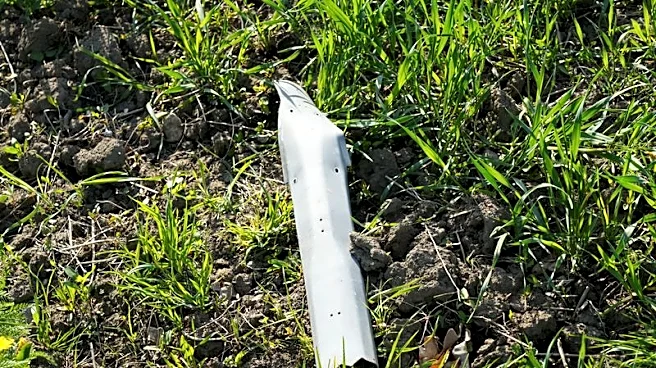
A Russian drone, part of an attack on Ukraine, mistakenly crashed into an apartment building in Galati, Romania, a NATO member country. The incident resulted in minor injuries to two individuals and prompted the evacuation of several others. Romanian
authorities tracked the drone via radar and scrambled military aircraft, but did not engage the drone. This event has heightened concerns about the potential spread of the conflict across NATO borders. Romania's Defense Ministry labeled the drone's flight as a serious violation of international law, and the Romanian government has requested expedited anti-drone capabilities from NATO. The incident is part of a series of drone-related events affecting NATO countries, raising questions about air defense capabilities on the alliance's eastern flank.
Why It's Important?
The drone incident underscores the ongoing risks posed by the Russia-Ukraine conflict to NATO member states. It highlights the potential for accidental or intentional incursions into NATO territory, which could escalate tensions and lead to broader military engagements. The event has prompted Romania to call for enhanced defense measures and has drawn strong condemnation from NATO allies. The situation also reflects the broader strategic challenges faced by NATO in securing its eastern borders against potential threats from Russia. The incident may influence NATO's defense policies and resource allocation, particularly in terms of airspace security and anti-drone technologies.
What's Next?
Romania's response includes convening its top defense body to discuss the implications of the incident and declaring the Russian consul in Constanta persona non grata. NATO allies are informally discussing the incursion, and Romania may request formal consultations if it perceives a threat to its security. The European Union is also drafting additional sanctions against Russia. The incident may lead to increased military readiness and cooperation among NATO members to deter future threats. Additionally, there may be diplomatic repercussions, including further isolation of Russia on the international stage.
Beyond the Headlines
The incident raises broader questions about the effectiveness of international law in preventing airspace violations and the challenges of enforcing such laws in conflict zones. It also highlights the potential for technological warfare, as drones become increasingly used in military operations. The situation may prompt discussions on the ethical implications of drone warfare and the need for international agreements to regulate their use. Furthermore, the incident could influence public opinion in NATO countries, potentially increasing support for defense spending and military alliances.