





What's Happening?
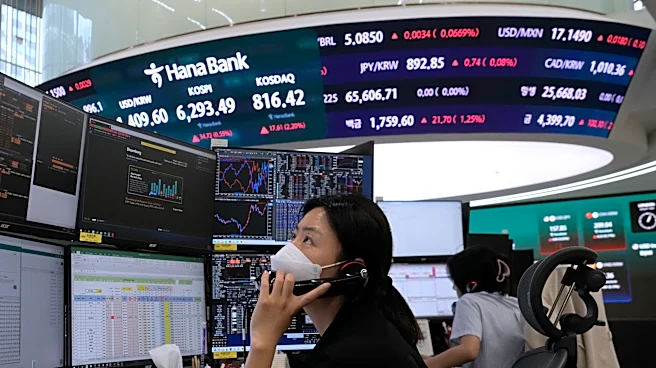
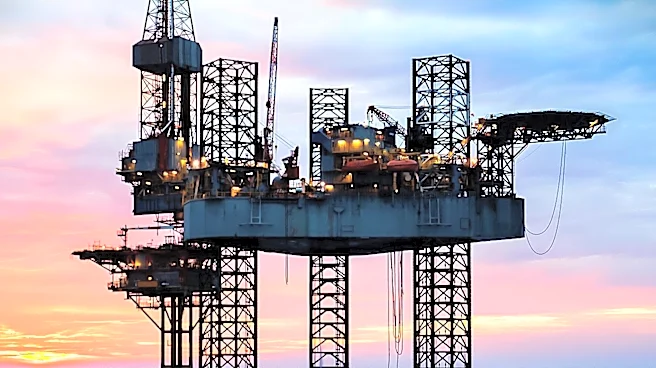
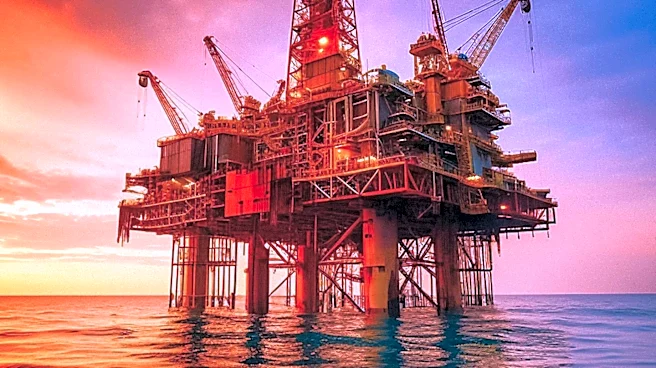
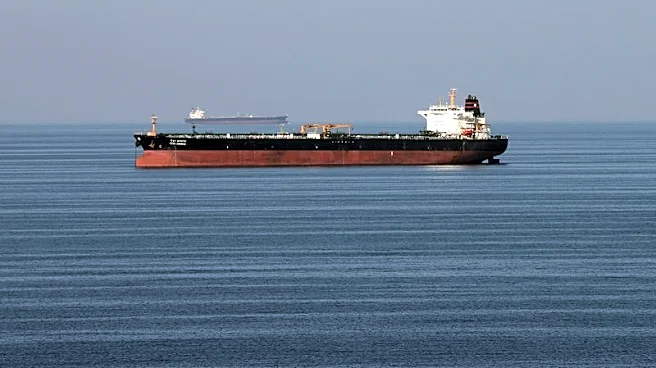
The FTSE 100 index closed lower on Monday, dropping 38.59 points, or 0.4%, as oil prices surged due to geopolitical tensions in the Middle East. The rise in crude oil prices followed Iran's Revolutionary Guard Corps' warning that the Strait of Hormuz
would remain closed until the U.S. met certain demands. Brent oil prices increased to $86.35 per barrel. President Trump downplayed the situation, indicating a low-key approach to negotiations with Iran. The ongoing conflict is a significant concern for markets, with no immediate resolution in sight.
Why It's Important?
The closure of the Strait of Hormuz, a critical chokepoint for global oil shipments, has significant implications for global energy markets and economic stability. Rising oil prices can lead to increased costs for businesses and consumers, potentially impacting inflation and economic growth. The situation underscores the fragility of geopolitical relations and their direct impact on financial markets. Investors are closely monitoring developments, as prolonged tensions could exacerbate market volatility and influence central bank policies.
What's Next?
Attention is now on upcoming U.S. inflation figures and the Federal Reserve's response to recent economic data. The Federal Open Market Committee will consider these factors in its September meeting, with the Jackson Hole Symposium also on the horizon. Market participants are watching for any shifts in monetary policy that could arise from these economic indicators. The geopolitical situation in the Middle East remains fluid, with potential for further developments that could affect global markets.