
What's Happening?
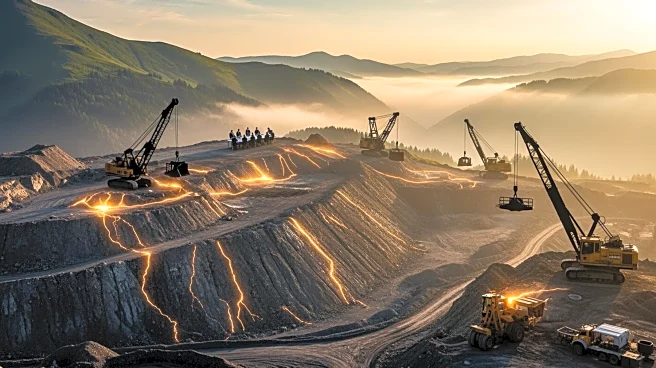
The K92 Mine in Papua New Guinea has recently commissioned its Stage-3 processing plant, aiming to produce up to 1.2 million tons of minerals annually, including gold and silver. This expansion is part
of the mine's strategy to transition into a Tier-one gold mining company, which involves large-scale, high-quality, and low-cost operations. The mine has been a significant taxpayer, contributing millions in taxes and royalties to the government. However, the expansion has also highlighted ongoing issues with local landowners, who have expressed concerns over the distribution of benefits. Kainantu MP William Hagahuno has been vocal about the need for the mine and the government to address these concerns, which include outstanding royalty payments and the formalization of benefit-sharing agreements.
Why It's Important?
The expansion of the K92 Mine is significant for Papua New Guinea's economy, as it promises increased tax revenues and job opportunities. However, the unresolved issues with landowners underscore the challenges of balancing economic development with social equity. The landowners' demands for fair royalty distribution and equity participation reflect broader concerns about the socio-economic impacts of mining on local communities. Addressing these issues is crucial for maintaining social stability and ensuring that the benefits of mining are equitably shared. The situation also highlights the importance of transparent and inclusive negotiations between mining companies, governments, and local communities.
What's Next?
The K92 Mine management is actively working to improve relations with landowners by initiating regular meetings and establishing new communication channels. These efforts aim to address grievances and ensure that the benefits of the mine's expansion are shared with local communities. The government is also expected to play a role in resolving outstanding issues, such as finalizing benefit-sharing agreements and expediting royalty payments. The success of these initiatives will likely influence future mining projects in the region and set a precedent for how resource development can be managed in a way that respects the rights and interests of local stakeholders.
Beyond the Headlines
The situation at the K92 Mine highlights the complex interplay between economic development and social justice in resource-rich regions. The landowners' demands for a fair share of the mine's profits reflect a broader struggle for indigenous rights and self-determination. This case could serve as a model for other mining operations worldwide, emphasizing the need for ethical business practices and the importance of corporate social responsibility. The outcome of the negotiations at K92 Mine could influence global standards for how mining companies engage with local communities and manage the environmental and social impacts of their operations.