



What's Happening?
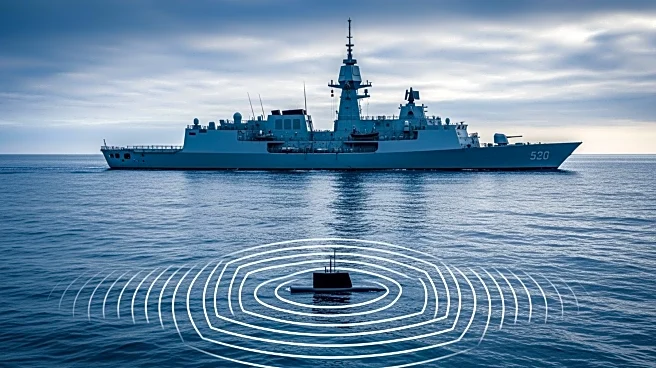
Norway and the United Kingdom have solidified their defense partnership by announcing a significant purchase of British Type 26 frigates. Norwegian Prime Minister Jonas Støre confirmed the acquisition of at least five frigates for $13.5 billion, which
will be built by BAE Systems for anti-submarine warfare. This move is part of a broader strategy to counter the increasing threat from Russian submarines. The frigates will be constructed to identical specifications and operated jointly by both nations. Additionally, maintenance and training facilities will be shared, with a new facility planned for Harstad, Norway. This collaboration is further enhanced by the recent deployment of Norwegian and British naval forces in the Indo-Pacific region, showcasing their strengthened maritime ties.
Why It's Important?
The alliance between Norway and the UK is a strategic response to the growing presence of Russian submarines in the North Atlantic. By enhancing their anti-submarine capabilities, both countries aim to secure critical maritime routes and deter potential threats. This partnership not only strengthens NATO's northern flank but also exemplifies post-Brexit Britain's efforts to forge bilateral defense relationships. The joint operations and shared resources signify a deepening of military cooperation, which could influence regional security dynamics and encourage similar collaborations among other NATO members.
What's Next?
The implementation of the Lunna House Agreement, which formalizes this partnership, will see increased joint training and operational coordination between the two nations. The agreement also includes the expansion of the Royal Marines' presence in Norway and the adoption of Norwegian naval strike missiles by the UK. As these initiatives unfold, both countries will likely continue to enhance their military readiness and interoperability, potentially leading to further defense agreements and collaborations with other allies.
Beyond the Headlines
This development highlights the shifting defense strategies in Europe, particularly in response to perceived threats from Russia. The focus on anti-submarine warfare underscores the importance of securing underwater domains, which are crucial for national security and global trade. The collaboration also reflects a broader trend of regional defense partnerships, which may redefine traditional alliances and influence future geopolitical alignments.