



What's Happening?
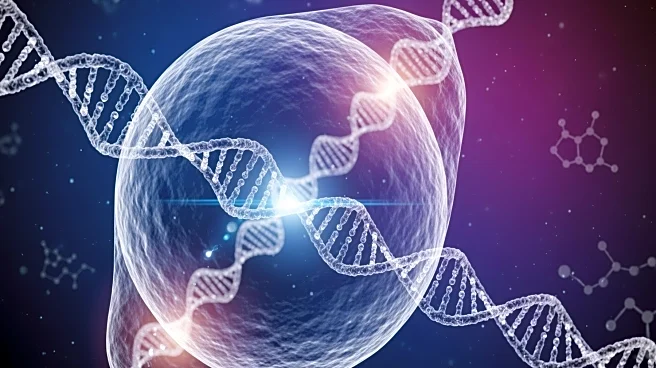
Researchers have successfully resurrected 'dead' bacterial cells by replacing their non-functional DNA with a working genome from another species. This breakthrough, reported on the preprint server bioRxiv, involves the transfer of entire genomes into
bacteria, potentially endowing them with new properties such as drug or biofuel production. The process has been demonstrated within a single bacterial class, specifically between Mycoplasma species. The study highlights the potential for broader applications if genome transfers can be achieved across different bacterial classes. This development is seen as a significant advancement in genome engineering and synthetic biology, with implications for creating synthetic life forms.
Why It's Important?
The ability to transfer genomes between bacterial species could revolutionize synthetic biology by enabling the creation of microorganisms with tailored properties. This could lead to advancements in biotechnology, such as the development of bacteria capable of producing pharmaceuticals or biofuels. The research also addresses previous challenges in genome transplantation, such as false positives due to homologous recombination. By inactivating the recipient cells' genomes, researchers have minimized these issues, paving the way for more reliable genome engineering techniques. This could have significant implications for industries reliant on microbial production processes.
What's Next?
Future research will likely focus on expanding the range of bacterial species that can undergo genome transplantation. This could involve testing the technique on more commonly studied bacteria like Escherichia coli. Additionally, researchers may explore the potential for creating synthetic life forms with entirely new functionalities. The development of these 'zombie cells' could also lead to new methods for testing engineered genomes, potentially accelerating the pace of innovation in synthetic biology and related fields.