




What's Happening?
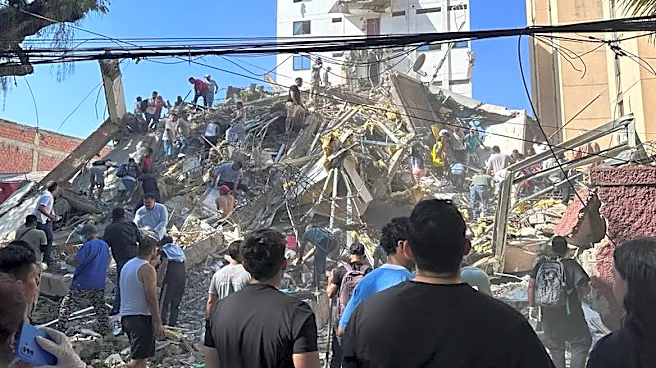
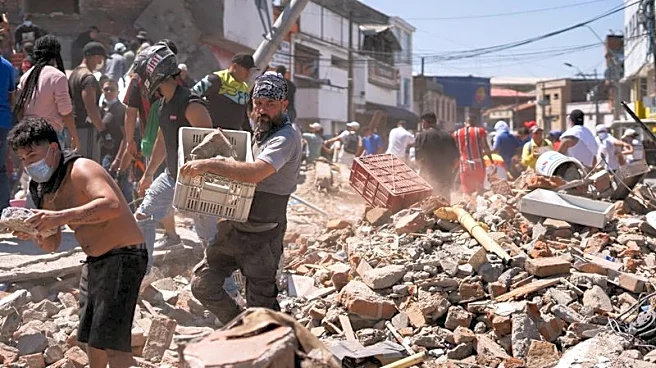
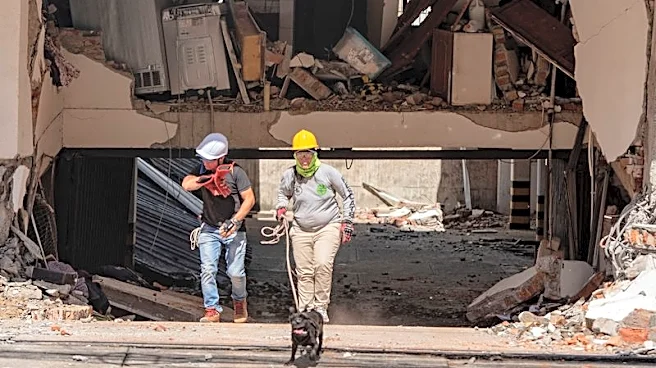
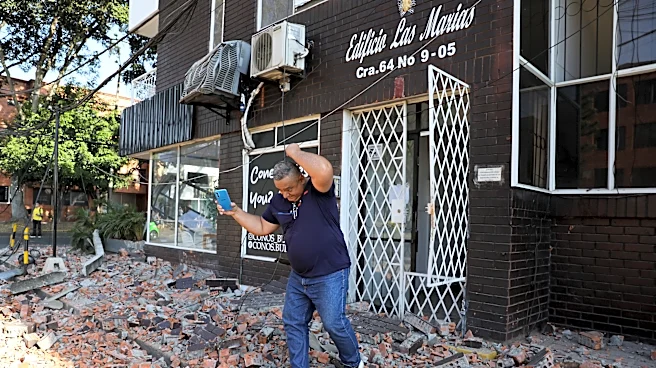
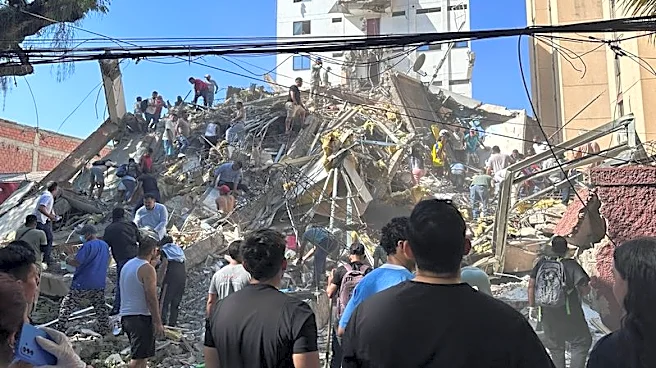
A recent earthquake in Colombia, measuring 7.4 in magnitude, was felt across a wide area of the country. The seismic activity is attributed to the movement of tectonic plates, specifically the subduction of the Pacific plate beneath the South American
plate. This geological process is responsible for the occurrence of large earthquakes in the region. The depth of the earthquake allowed seismic waves to travel over long distances, affecting cities such as Bogotá, Cali, and Medellín.
Why It's Important?
Understanding the geological factors behind the earthquake in Colombia is crucial for improving preparedness and response strategies. The widespread impact of the earthquake highlights the need for robust infrastructure and emergency systems to mitigate damage and protect lives. The event serves as a reminder of the ongoing seismic risks in the region and the importance of scientific research in predicting and managing such natural disasters. Enhancing public awareness and education on earthquake preparedness can significantly reduce the potential for loss and damage.