
What's Happening?
A recent study published in the Proceedings of the National Academy of Sciences has uncovered that Natufian hunter-gatherers, residing in the southern Levant approximately 15,000 years ago, regularly incorporated
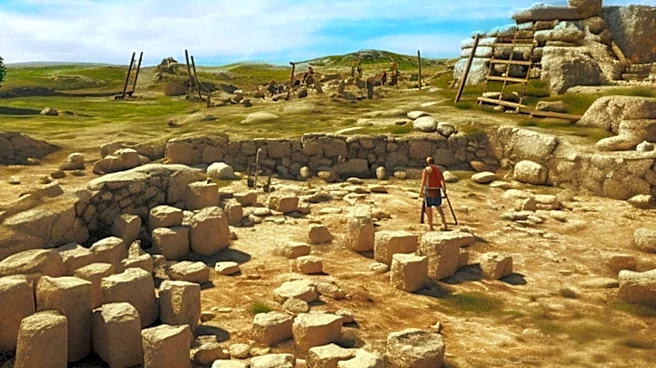
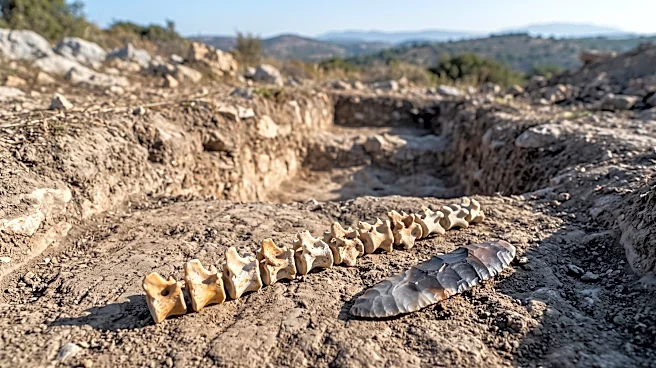
lizards and snakes into their diet. This discovery emerged from the examination of reptile bones found at el-Wad Terrace on Mount Carmel in Israel, a site with 20 layers of repeated settlements dating back 15,000 to 12,000 years ago. Researchers identified clear signs of human butchery, such as flint knife marks on the vertebrae of large whip snakes and eastern Montpellier snakes, indicating intentional processing rather than natural death or animal predation. Evidence also points to the consumption of European glass lizards, which were frequently found across settlement layers. The study suggests that Natufian groups made practical choices in selecting reptiles, favoring larger animals for more meat and slower, less dangerous species that were easier to catch and handle, with harmless snakes being preferred over venomous vipers.
Why It's Important?
This research offers significant insights into the dietary adaptations and subsistence strategies of early sedentary communities before the advent of agriculture. The consistent consumption of reptiles over thousands of years by Natufian groups at Mount Carmel highlights a crucial shift in human behavior as they transitioned from highly mobile hunter-gatherer lifestyles to more settled existences. This dietary diversification provided a stable and accessible food source, reducing the need for extensive travel for hunting and gathering. The findings challenge previous assumptions about the primary food sources of pre-agricultural societies, suggesting a more varied and opportunistic approach to resource utilization. Understanding these ancient dietary patterns can inform broader anthropological and archaeological studies on human adaptation, resource management, and the complex factors that contributed to the eventual development of agriculture and permanent settlements.
What's Next?
Future research will likely delve deeper into the specific methods of reptile preparation and consumption, potentially through advanced analysis of bone modifications and residue analysis on ancient tools. Comparative studies with other Natufian sites and contemporary cultures in different regions could further illuminate the prevalence and significance of reptile consumption in pre-agricultural diets. Researchers may also explore the long-term ecological impacts of such dietary practices on local reptile populations and the broader ecosystem of the southern Levant during that period. Additionally, the study's methodology could be applied to other archaeological sites to identify similar patterns of resource exploitation, potentially revealing new aspects of human dietary evolution and adaptation across various ancient cultures.
Beyond the Headlines
The study's implications extend beyond mere dietary habits, shedding light on the ingenuity and adaptability of early human societies. The deliberate selection of specific reptile species based on factors like size, ease of capture, and safety demonstrates a sophisticated understanding of their environment and resource management. This nuanced approach to food acquisition underscores the complex decision-making processes that characterized early human survival strategies. Furthermore, the sustained reliance on reptiles as a food source in a relatively stable Mediterranean scrub landscape suggests that environmental changes were not the primary driver of this dietary shift, but rather human behavioral choices linked to increasing sedentism. This highlights the profound impact of social and cultural factors on human-environment interactions, even in prehistoric times, offering a valuable perspective on the origins of human resourcefulness and the foundations of settled life.