






What's Happening?
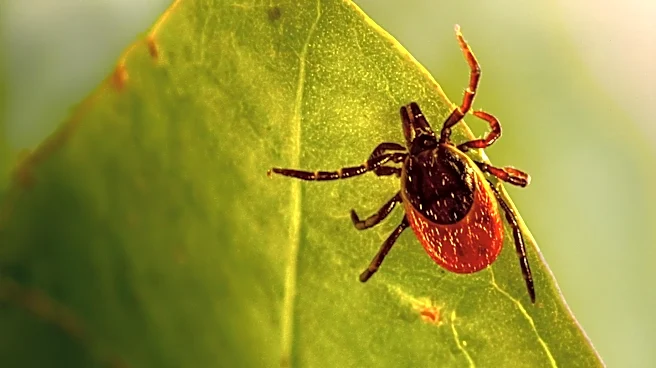
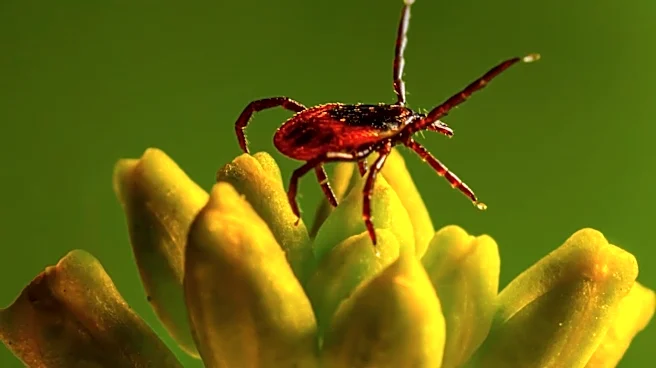
Ticks are increasingly becoming a significant public health concern in the United States, with their population and the diseases they carry expanding rapidly. This surge is attributed to factors such as climate change, changes in land use, and a growing
deer population. Ticks are known to transmit various diseases, including Lyme disease and Alpha-gal syndrome, a condition that causes an allergy to red meat. The Centers for Disease Control and Prevention (CDC) reports that Lyme disease is the fastest-growing vector-borne disease in the U.S., with cases more than doubling over the past decade. Despite the rising threat, public health efforts remain focused on mosquito control, with limited resources allocated to tick management. Experts suggest that addressing the deer population, which serves as a primary host for ticks, could be a crucial step in controlling their spread.
Why It's Important?
The increasing prevalence of tick-borne diseases poses a significant threat to public health in the U.S. With emergency room visits for tick bites at their highest since 2017, there is a pressing need for more comprehensive public health strategies. The current focus on mosquito control overlooks the growing impact of ticks, which account for 90% of vector-borne disease cases in the country. The economic and social implications are substantial, as these diseases can lead to severe health outcomes and affect people's outdoor activities and lifestyles. The lack of funding and policy support for tick control highlights a gap in public health priorities that needs urgent attention to prevent further spread and protect public health.
What's Next?
To effectively combat the tick problem, experts recommend a multifaceted approach that includes developing vaccines for deer and rodents, which are key hosts for ticks. This strategy could help reduce tick populations more sustainably than current methods. Additionally, public health campaigns to educate the public on preventive measures, such as regular tick checks and the use of insecticides like permethrin, are essential. Increased funding and research into tick control methods are also necessary to develop and implement effective interventions. As climate change continues to influence tick behavior and distribution, adapting public health strategies to address these changes will be crucial.
Beyond the Headlines
The tick surge underscores broader issues related to climate change and its impact on public health. As warmer winters allow ticks to expand their range and activity, the need for adaptive public health strategies becomes more apparent. This situation also highlights the importance of integrating environmental considerations into public health planning. The ethical dimension of wildlife management, particularly in controlling deer populations, presents challenges that require careful consideration of ecological and societal impacts. Long-term solutions will need to balance public health needs with environmental sustainability and ethical wildlife management practices.