





What's Happening?
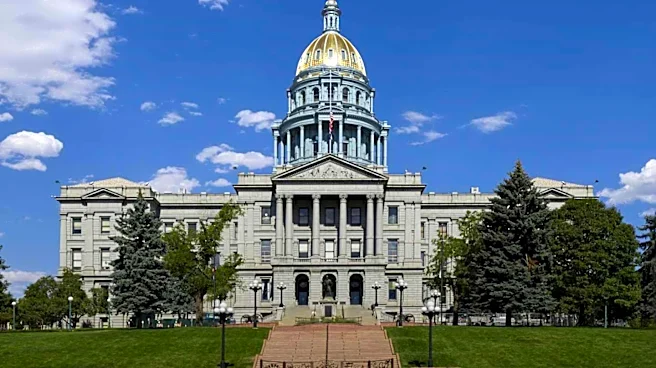
A federal political action committee (PAC) established by U.S. House Speaker Mike Johnson, named American Revival PAC, has contributed $250,000 to the Fair Redistricting Colorado issue committee. This committee is actively working to pass Amendment 86
in November. Amendment 86 is a ballot measure in Colorado designed to make it more challenging to redraw the state's congressional district boundaries outside of the established, once-a-decade process outlined in the state constitution. The measure is a Republican response to a previous Democratic redistricting effort that aimed to amend the state constitution and redraw congressional districts for the 2028 and 2030 elections. That Democratic initiative, funded by money linked to House Minority Leader Hakeem Jeffries, would have potentially allowed Democrats to flip three Republican-held seats, leaving the GOP with only one of the state's eight seats. However, the Colorado Supreme Court unanimously ruled in June that the Democratic ballot measure violated the state constitution's 'single subject' requirement.
Why It's Important?
This development highlights the ongoing national political battle over redistricting and its significant implications for electoral power. The involvement of high-profile national figures like House Speaker Mike Johnson and House Minority Leader Hakeem Jeffries underscores the strategic importance both parties place on controlling district maps. By funding Amendment 86, Speaker Johnson's PAC is attempting to solidify the existing redistricting process in Colorado, which was last updated in 2021. If passed, Amendment 86 would require Colorado's Independent Redistricting Commission to reconvene and hold public hearings for any mid-decade congressional map redraws. It would also mandate Colorado Supreme Court review and approval for such maps, with a requirement to reject maps that fail to keep 'communities of interest' whole or are drawn to favor one political party. This measure could prevent future attempts to alter district lines for partisan advantage, thereby impacting the balance of power in Colorado's congressional delegation and potentially influencing national election outcomes.
What's Next?
The focus will now be on the November election, where Colorado voters will decide on Amendment 86. For the amendment to pass, it requires the support of 55% of voters. The Fair Redistricting Colorado issue committee, backed by Speaker Johnson's PAC and other conservative groups like Advance Colorado and Common Sense America, will likely intensify its campaign efforts. Conversely, Colorado Draws the Line, an issue committee tied to Democrats, has indicated it will fight Amendment 86, though it has not yet reported any fundraising or spending. The outcome of this vote will determine the future flexibility of Colorado's redistricting process. If Amendment 86 passes, it will establish stricter constitutional safeguards against mid-decade redistricting changes. If it fails, the existing constitutional framework for redistricting will remain, potentially leaving room for future attempts to redraw maps outside the decennial census cycle.
Beyond the Headlines
The financial backing from national political figures and 'dark money' groups in a state-level ballot measure like Amendment 86 reveals a broader trend of nationalizing local electoral battles. The use of PACs and politically active nonprofits that do not disclose their donors, such as Advance Colorado and Common Sense America, raises questions about transparency in political funding and the extent of external influence on state electoral processes. This situation also underscores the ongoing tension between partisan political strategies and the principle of fair representation. The debate over 'communities of interest' and partisan gerrymandering, central to Amendment 86, reflects a fundamental challenge to American democracy: how to ensure electoral districts accurately reflect the population while preventing manipulation for political gain. The Colorado Supreme Court's previous ruling against the Democratic initiative on 'single subject' grounds also highlights the critical role of judicial oversight in maintaining the integrity of ballot measures and constitutional amendments.