





What's Happening?
NASA has announced the selection of three science payload suites under its Payloads and Research Investigations on the Surface of the Moon (PRISM) program. These payloads are designed to study surface hazards, potential underground lava tubes, and buried
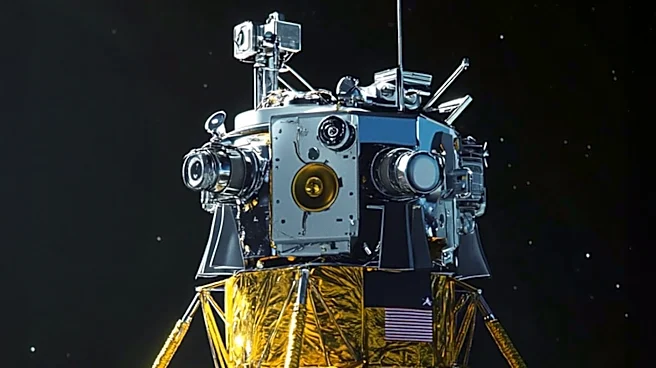
ice on the Moon, in preparation for a planned crewed outpost. The instruments will be delivered to the lunar surface via commercial landers as part of the Commercial Lunar Payload Services (CLPS) initiative, which supports the Artemis Moon Base Program. Nicky Fox, associate administrator of NASA’s Science Mission Directorate, stated that NASA Science is developing an 'interplanetary survival guide' to provide future astronaut crews with essential information, resources, and safety precautions for living on the Moon. The selected payloads include the Lunar Environment Monitoring Station – South Pole (LEMS-SP) for environmental and hazard monitoring, the Geophysical Instruments for Marius Lunar pit Investigation (GIMLI) to scan for lava tubes, and the Depth Imager with Spectral and Color Optics (DISCO) to measure lunar ice and study rocket exhaust effects.
Why It's Important?
This initiative is crucial for the long-term success and safety of NASA's Artemis program, which aims to establish a sustained human presence on the Moon. By studying lunar hazards, potential shelters like lava tubes, and vital resources such as water ice, NASA is laying the groundwork for future lunar missions and a permanent Moon base. The direct, on-the-ground measurements of lunar ice by DISCO will be a first, providing critical data for resource utilization. The identification of lava tubes by GIMLI could offer natural protection for astronauts from extreme temperatures and radiation, significantly reducing the logistical challenges and costs associated with building artificial shelters. Furthermore, understanding how rocket exhaust affects the lunar surface and assessing ground stability for mobility are vital for designing durable lunar infrastructure and ensuring safe operations for future crews. This program underscores the importance of scientific research in enabling human exploration and habitation beyond Earth.
What's Next?
The three selected science payload suites will be integrated into commercial landers and launched to the Moon. The exact launch windows for these missions were not specified in the source, but their deployment will mark the beginning of critical data collection. Once on the lunar surface, LEMS-SP will commence long-term environmental and hazard monitoring, while GIMLI will investigate the Marius Hills Pit for lava tubes. DISCO will conduct the first direct measurements of lunar ice and analyze the impact of rocket exhaust. The data gathered from these missions will inform the design and planning of future Artemis missions, particularly regarding site selection for the Moon base, resource extraction strategies, and astronaut safety protocols. The findings will be instrumental in refining NASA's 'interplanetary survival guide' and advancing the agency's goal of establishing a sustainable human presence on the Moon.
Beyond the Headlines
The PRISM program's focus on understanding the lunar environment and its resources has broader implications for the future of space exploration and potential off-world colonization. The search for water ice is particularly significant, as it could be processed into breathable oxygen, drinking water, and rocket fuel through electrolysis, drastically reducing the reliance on costly resupply missions from Earth. This self-sufficiency is a cornerstone of sustainable lunar habitation. The investigation into lava tubes highlights a creative approach to utilizing natural lunar features for shelter, potentially accelerating the timeline for establishing a permanent base. Moreover, the collaboration with commercial partners through the CLPS initiative signifies a growing trend in space exploration, leveraging private sector innovation to achieve ambitious scientific and exploratory goals. This model could pave the way for more efficient and cost-effective space missions, fostering a new era of lunar development and potentially opening doors for commercial ventures on the Moon.