




What's Happening?
Save the Children UK has launched its 'The One Delivery That Matters' campaign, drawing attention to the critical issue of children being denied access to life-saving aid globally. This initiative coincides with the festive season, during which British
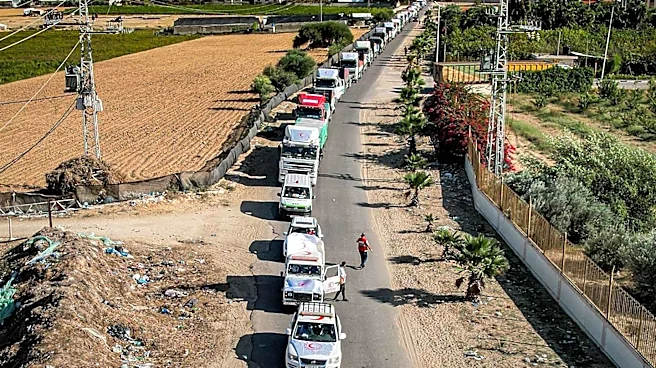
families are expected to receive an estimated 53 million deliveries per week. Olympic gold medallist and Save the Children Ambassador Sir Mo Farah opened a unique 'Delivery Office' in London to showcase the innovative methods the charity uses to deliver aid in challenging environments. New research from the organization reveals that children in the toughest circumstances are denied access to aid almost every hour due due to increasing barriers such as conflict, climate change, and global instability. The campaign aims to encourage the public to make a donation that can provide essential support, such as education kits, life-saving vaccines, or emergency shelter, to children in need worldwide.
Why It's Important?
This campaign is important because it highlights a growing humanitarian crisis where aid is increasingly being weaponized or obstructed, directly impacting the lives of millions of children. The stark contrast between the abundance of consumer deliveries during the festive season and the denial of essential aid to vulnerable children underscores a significant global disparity. The research indicating that children are denied aid almost every hour points to a systemic failure in protecting the most vulnerable during conflicts and disasters. This denial of aid has severe consequences, including increased malnutrition, lack of healthcare, interrupted education, and heightened protection risks for children. By raising awareness and seeking public donations, Save the Children aims to mobilize resources to overcome these barriers and ensure that children receive the critical support they need to survive, learn, and thrive. The campaign also serves as a call to action for governments and international bodies to address the root causes of aid denial and uphold humanitarian principles.
What's Next?
The 'The One Delivery That Matters' campaign will continue to run, urging the public to donate and support Save the Children's efforts. The immersive 'Delivery Office' experience in London will likely continue to engage visitors and raise awareness about the charity's work. Save the Children UK will continue to advocate for improved humanitarian access and protection for children in conflict zones and areas affected by climate change. The organization will also persist in its innovative delivery methods, such as using drones for emergency supplies and donkeys for vaccine transport, to reach isolated communities. The campaign's success will be measured by its ability to generate donations and increase public engagement, which will directly impact the charity's capacity to provide life-saving aid. Furthermore, the ongoing research and advocacy efforts will aim to influence policy-makers to address the underlying issues contributing to aid denial and ensure that humanitarian assistance reaches those who need it most.
Beyond the Headlines
Beyond the immediate call for donations, this campaign touches upon the broader ethical implications of global inequality and the weaponization of humanitarian aid. The comparison between consumerism and critical aid delivery highlights a societal disconnect, where convenience for some contrasts sharply with life-or-death struggles for others. The 'weaponization of aid' signifies a dangerous trend in modern warfare, where humanitarian assistance is deliberately obstructed as a tactic, violating international humanitarian law. This not only exacerbates suffering but also undermines the fundamental principles of neutrality and impartiality in aid delivery. The campaign implicitly challenges individuals and governments to reflect on their roles in a globalized world, urging a shift from passive observation to active participation in addressing humanitarian crises. It also underscores the resilience and adaptability of aid organizations in finding innovative ways to reach vulnerable populations despite immense challenges, emphasizing the critical importance of their work in a world increasingly marked by conflict and climate-induced disasters.