


What's Happening?
Hungary's resistance has led to a pause in the European Union's planned €90 billion aid package for Ukraine. This delay comes as Ukraine urgently needs funds to support its defenses and daily operations. The situation is further complicated by recent
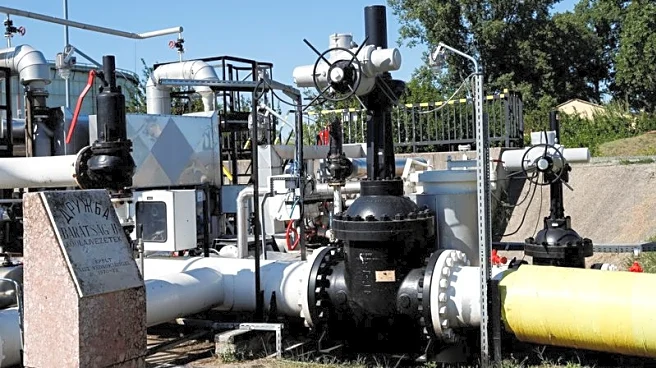
tensions involving the Druzhba oil pipeline, a critical source of Russian crude oil for Hungary. Ukrainian drones reportedly attacked a key section of the pipeline in Russia, disrupting operations. Hungary's Prime Minister Viktor Orbán has accused Ukraine of threatening Hungarian energy security and has threatened to veto EU assistance to Ukraine. This development highlights the broader struggle within the EU, where consensus-based decision-making can stall progress.
Why It's Important?
The pause in EU aid to Ukraine has significant implications for the ongoing conflict in Eastern Europe. Ukraine relies heavily on international support to sustain its defense against Russian aggression. The delay in aid could weaken Ukraine's position and embolden Russia. Additionally, Hungary's stance reflects internal EU divisions, which could undermine the bloc's ability to present a united front against Russia. The situation also affects energy security in Europe, as Hungary receives a substantial portion of its oil from Russia via the Druzhba pipeline. Disruptions to this supply could lead to increased energy prices and economic instability in Hungary and potentially other EU countries.
What's Next?
The EU is expected to continue discussions on the aid package and Hungary's opposition. The outcome will depend on whether Hungary maintains its veto threat or if diplomatic efforts can resolve the impasse. Meanwhile, Ukraine may seek alternative sources of support, such as the International Monetary Fund, which is close to approving an $8.1 billion lending program. The situation also puts pressure on Hungary's domestic politics, with upcoming elections potentially influencing the government's stance. The EU's ability to navigate these challenges will be crucial in determining its role in the conflict and its broader geopolitical influence.