
What's Happening?
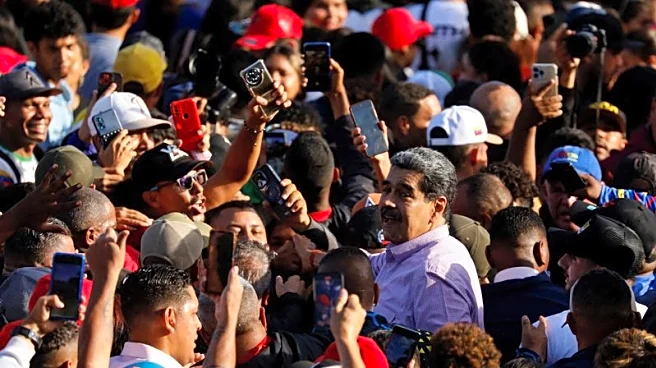
Former Venezuelan President Nicolás Maduro was captured in a U.S. military operation in Caracas, Venezuela. The operation, which took place on January 3, involved the use of at least one RQ-170 Sentinel
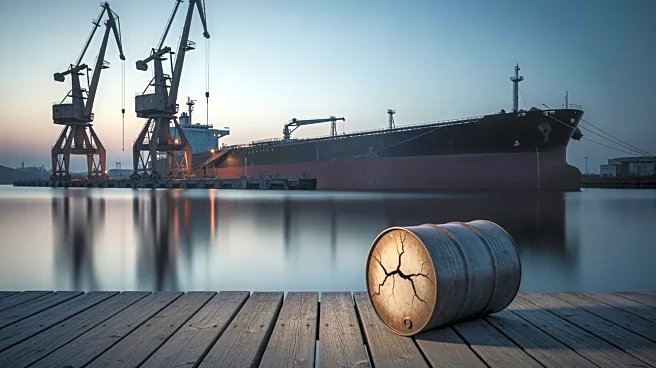
stealth drone and was supported by U.S. intelligence agencies. Following the capture, President Trump announced that the U.S. would temporarily manage Venezuela during the transition period and work to resume oil production. Secretary of State Marco Rubio indicated that while the U.S. does not plan to directly govern Venezuela, it will maintain an 'oil quarantine' to influence the country's policy direction.
Why It's Important?
The capture of Nicolás Maduro marks a significant shift in U.S.-Venezuelan relations and could have substantial geopolitical implications. By taking control of Venezuela's political transition, the U.S. aims to stabilize the region and secure its interests, particularly in the oil sector. This move may also impact U.S. relations with other countries in Latin America and could lead to changes in international oil markets. The operation underscores the U.S.'s commitment to using military and intelligence resources to achieve foreign policy objectives.
What's Next?
The U.S. will likely focus on stabilizing Venezuela and ensuring a smooth transition of power. This may involve diplomatic efforts to garner international support and collaboration with regional allies. The continuation of the 'oil quarantine' suggests that the U.S. will use economic measures to influence Venezuela's future policies. The international community will be watching closely to see how the situation unfolds and how it affects global oil prices and regional stability.