

What's Happening?
Senate Republican sources anticipate that President Trump will endorse a Senate-passed bill aimed at funding the Department of Homeland Security (DHS), excluding Immigration and Customs Enforcement (ICE) and Border Patrol. This move is seen as a potential
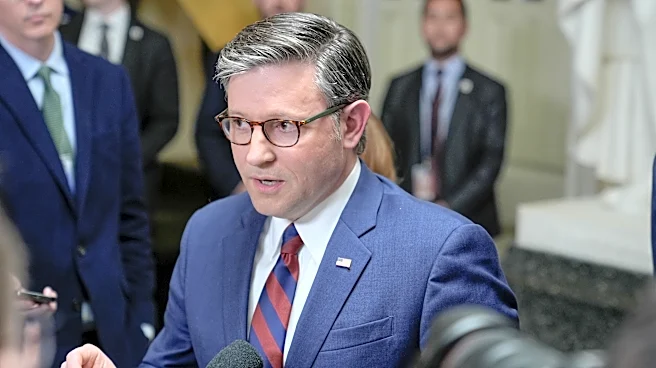
resolution to a standoff with House Speaker Mike Johnson, which has contributed to a partial government shutdown. Senate Majority Leader John Thune has been in discussions with President Trump to navigate the impasse with House Republicans. The Senate bill, which does not include funding for ICE, is viewed as a strategic step to end the shutdown and initiate a budget reconciliation package for immigration enforcement and possibly the Pentagon. Despite initial resistance, Trump is reportedly open to supporting the Senate bill, although he could change his stance. The White House is reconsidering its support for a House-passed stopgap measure due to Senate Democrats' opposition.
Why It's Important?
The potential endorsement of the Senate bill by President Trump is significant as it could resolve the ongoing government shutdown affecting the DHS. The shutdown has implications for national security and the functioning of various agencies under DHS. By supporting the Senate bill, Trump could facilitate the passage of a budget reconciliation package that would address funding for ICE and Border Patrol, aligning with Republican priorities on immigration enforcement. This development also highlights the internal dynamics within the GOP, as Senate and House Republicans navigate differing strategies and pressures from their political base. The resolution of this standoff could impact future legislative negotiations and the GOP's approach to immigration policy.
What's Next?
If President Trump endorses the Senate bill, it could lead to a swift resolution of the DHS funding issue, allowing the government to resume full operations. The focus would then shift to crafting a budget reconciliation package to address immigration enforcement funding. However, Trump's decision could still be influenced by reactions from GOP base voters and House Republicans. The outcome of this situation will likely affect the GOP's legislative strategy and its ability to unify on key policy issues. Additionally, the handling of this standoff may influence public perception of the party's effectiveness in governance.