


What's Happening?
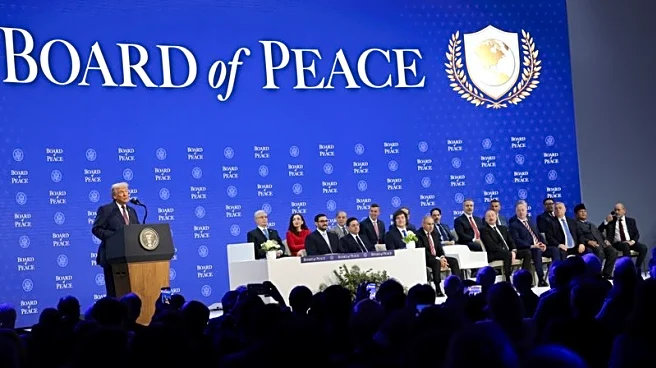
Prime Minister Benjamin Netanyahu will not attend the upcoming Gaza Board of Peace summit in Washington, opting instead to participate remotely in the AIPAC policy conference. Foreign Minister Gideon Sa'ar will represent Israel at the summit, which will include
leaders from Arab and Muslim countries. The summit, led by President Trump, aims to unveil a multibillion-dollar reconstruction plan for Gaza and propose a UN-backed stabilization force. Concerns in Jerusalem revolve around external pressures to accept a Gaza settlement under terms deemed unfavorable by the Israeli government. The summit will also address the disarmament of Hamas fighters, offering amnesty to those who disarm and peaceful coexistence.
Why It's Important?
The summit is crucial for the future of Gaza, as it involves significant international efforts to stabilize and rebuild the region. The participation of multiple countries, including Turkey, Egypt, Saudi Arabia, and Qatar, highlights the global interest in resolving the conflict. The proposed reconstruction plan and stabilization force could lead to improved living conditions in Gaza, but also pose challenges regarding the disarmament of Hamas and the political dynamics in the region. Israel's cautious approach reflects its concerns over sovereignty and security, as well as the potential impact on its relations with the U.S. and other participating nations.
What's Next?
The outcomes of the summit could lead to significant changes in Gaza's governance and security landscape. The establishment of a National Committee for the Administration of Gaza aims to replace Hamas in civilian governance, potentially altering the power dynamics in the region. The success of the reconstruction plan and stabilization force will depend on the cooperation of local and international stakeholders. Israel's response to the summit's proposals will be critical in shaping future diplomatic and security strategies in the Middle East.