


What's Happening?
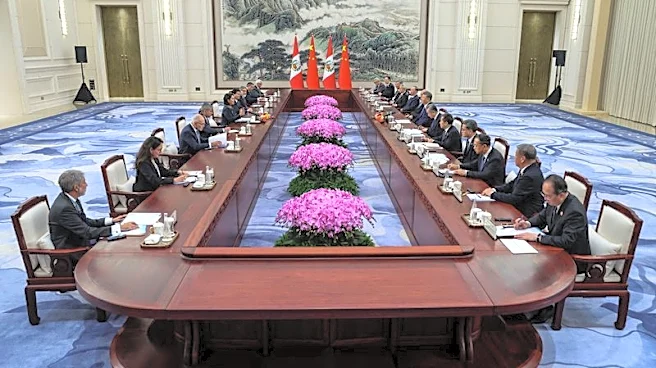
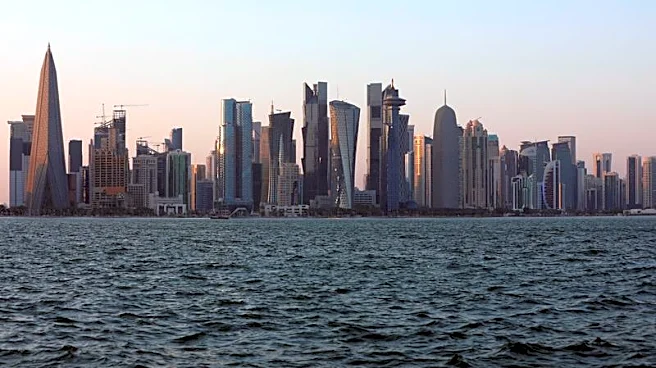
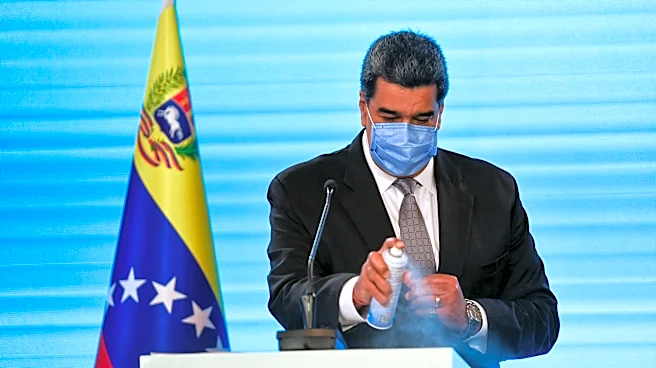
Venezuela’s Acting President Delcy Rodríguez recently concluded a regional tour, including stops in Abu Dhabi and Doha, to foster economic cooperation and attract foreign investment. In Abu Dhabi, she met with UAE President Mohamed bin Zayed Al Nahyan,
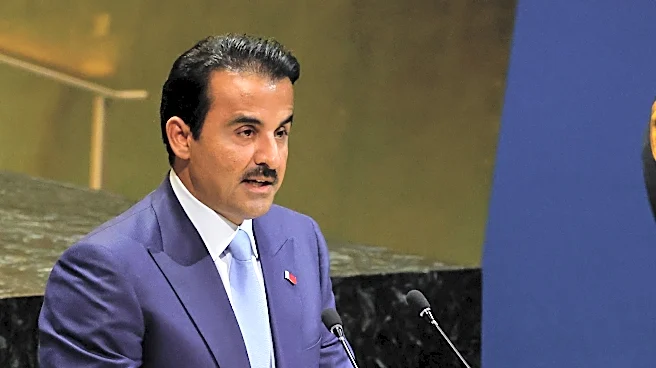
where discussions focused on economic and development cooperation, bilateral relations, and the upcoming United Nations Water Conference. Rodríguez also participated in a Venezuela–UAE business roundtable, presenting investment opportunities in economic development, energy, tourism, and aviation. The Venezuelan delegation included Economy Vice President Calixto Ortega, Foreign Minister Oliver Blanco, Hydrocarbons Minister Paula Henao, and Communications Minister Miguel Pérez Pirela. Prior to the UAE, Rodríguez visited Qatar, meeting with Emir Tamim bin Hamad Al Thani to discuss similar bilateral cooperation and investment prospects. This tour follows her participation in the COP31 climate conference in Türkiye.
Why It's Important?
This diplomatic push by Venezuela to secure investment from Gulf states like the UAE and Qatar is significant for its potential to impact Venezuela's struggling economy. Attracting foreign capital, particularly in sectors like energy, could provide a much-needed boost to the country's infrastructure and economic development. For the UAE and Qatar, these engagements represent an opportunity to expand their influence and investment portfolios in Latin America. However, the broader implications also touch upon the complex geopolitical landscape, as both Gulf nations have faced criticism from certain sectors for their alliances with Washington and their interventions in other regions. The discussions around investment opportunities in energy are particularly noteworthy, given Venezuela's vast oil reserves and the global demand for energy resources.
What's Next?
The meetings and business roundtables are expected to pave the way for further discussions and potential agreements between Venezuela and the UAE and Qatar. The evaluation of investment opportunities and joint development projects suggests that concrete proposals and collaborations could emerge in the near future. The upcoming United Nations Water Conference in Abu Dhabi, which was also discussed, indicates a potential area for multilateral cooperation. The continued engagement between Venezuela and these Gulf states could lead to new trade agreements, foreign direct investments, and partnerships in various economic sectors, potentially altering Venezuela's economic trajectory and its international relations.
Beyond the Headlines
Beyond the immediate economic benefits, this tour highlights Venezuela's strategic efforts to diversify its international partnerships and reduce its reliance on traditional alliances. The engagement with Gulf monarchies, despite their complex geopolitical alignments, underscores a pragmatic approach to securing economic stability. The criticism faced by the UAE and Qatar from progressive and anti-imperialist sectors regarding their alliances and interventions adds a layer of ethical and political complexity to these investment discussions. This situation reflects the broader global trend where economic necessity often drives diplomatic engagements, even with nations that have divergent political ideologies or controversial foreign policy records. The long-term impact could reshape regional power dynamics and influence future investment flows in Latin America.