
What's Happening?
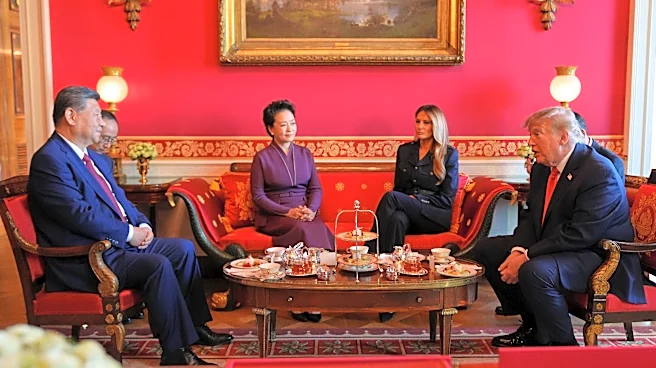
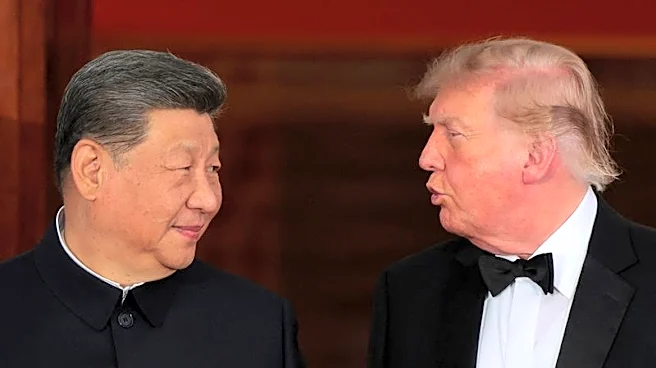
President Trump has disputed claims that he offered to sell weapons to Chinese leader Xi Jinping, contradicting an account made by U.S. Ambassador to China, David Perdue. President Trump suggested that Perdue was
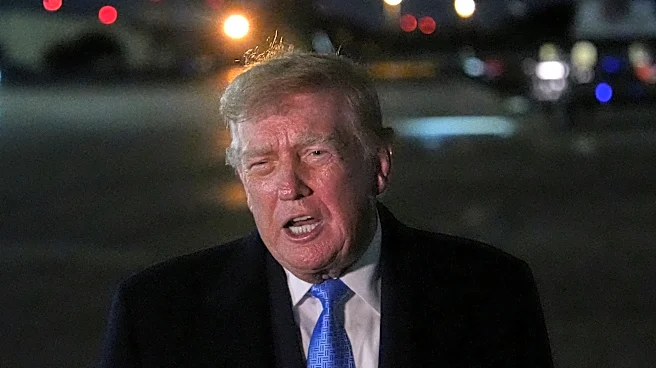
likely referring to Taiwan, not China, when discussing potential arms sales. He stated, “To China? You mean to Taiwan? I never heard of that one. I’m going to have to ask him.” While initially expressing confusion, President Trump later mused that selling arms to China might be a 'good idea' but clarified that it was not discussed. The State Department has also distanced the administration from Perdue's comments, affirming that U.S. law prohibits arms sales to China and there is no such offer or plan.
Why It's Important?
This dispute is significant because it highlights potential inconsistencies and a lack of coordination within the U.S. administration's foreign policy, particularly concerning sensitive geopolitical relationships. Arms sales are a critical component of international diplomacy and national security, and any perceived offer to a rival like China could have profound implications for U.S. alliances, especially with Taiwan. The U.S. has a long-standing policy of providing Taiwan with the means to defend itself, and any suggestion of arms sales to Beijing could undermine this commitment and destabilize regional security. The incident also underscores President Trump's transactional approach to foreign policy, where economic considerations sometimes appear to outweigh traditional diplomatic norms and strategic alliances, as noted by analysts like Evan Sankey and Craig Singleton.
What's Next?
The immediate next step will likely involve clarification from Ambassador Perdue regarding his original statement and further internal discussions within the Trump administration to ensure a unified message on U.S. arms sales policy. The incident may prompt questions from Congress and international allies about the coherence of U.S. foreign policy towards China and Taiwan. China's foreign ministry spokesperson, Guo Jiakun, did not confirm Perdue's remarks but reiterated China's commitment to strengthening its national defense. The situation could lead to increased scrutiny of U.S. diplomatic communications and potentially influence future interactions between President Trump and President Xi, particularly concerning trade and security issues in the Indo-Pacific region. The ongoing debate about U.S. arms sales to Taiwan will likely continue, with this incident adding another layer of complexity.
Beyond the Headlines
This episode delves into the deeper complexities of U.S.-China relations and the strategic ambiguity surrounding Taiwan. The suggestion of arms sales to China, even if misconstrued, touches upon the fundamental U.S. policy of not selling advanced weaponry to Beijing, a policy rooted in national security concerns and human rights. Conversely, the U.S. commitment to Taiwan's defense, while not a formal recognition of its independence, is a cornerstone of regional stability. President Trump's 'transactional worldview,' as described by analysts, suggests a willingness to use economic leverage in diplomatic dealings, potentially blurring traditional lines between allies and adversaries. This approach could have long-term implications for global arms control regimes and the perception of U.S. reliability among its allies, potentially leading to a re-evaluation of defense strategies in the region and beyond. The incident also highlights the challenges of communicating complex foreign policy positions in a rapidly evolving geopolitical landscape.