





What's Happening?
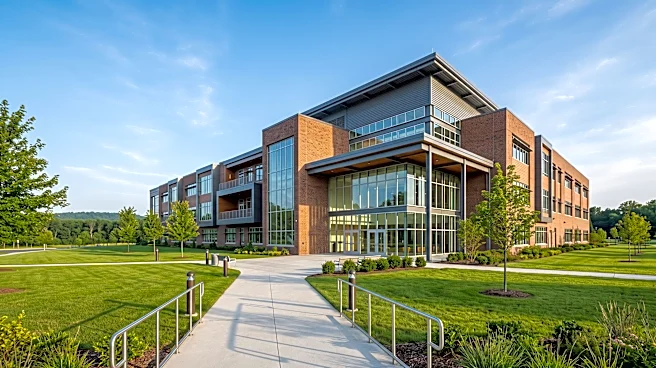
Scuola Vita Nuova (SVN) Charter School in Kansas City's Historic Northeast has expanded its facilities with the addition of the Sherman Center and an 8th Grade Innovation Center. The Sherman Center, added in 2021, provides state-of-the-art STEAM (Science,
Technology, Engineering, Arts, and Math) facilities on the main campus. The latest expansion involves converting a former Social Security Administration office at 2021 Independence Avenue into a specialized 8th Grade Innovation Center. This new facility offers high-tech flexible classrooms, a culinary teaching kitchen, and a wellness and movement studio, designed to foster independence and hands-on learning for graduating 8th graders. SVN, a tuition-free public charter school founded in 1999, serves students in grades K-8 and is known for its academic growth, community ties, and family involvement. The school has a history of adaptively reusing historic neighboring structures, including the 2018 renovation of the former St. John’s church rectory into the Mary Glenn Donnelly Center for upper middle schoolers.
Why It's Important?
The expansion of Scuola Vita Nuova's facilities, particularly with the Sherman Center and the 8th Grade Innovation Center, signifies a significant investment in educational infrastructure and opportunities for students in Kansas City's Historic Northeast. The focus on STEAM education in the Sherman Center addresses the growing demand for skills in these critical fields, preparing students for future careers and contributing to a more skilled workforce. The 8th Grade Innovation Center's specialized environment, including a culinary teaching kitchen and wellness studio, offers a unique bridge between middle and high school, promoting practical skills and holistic development. This approach can lead to improved student engagement, higher academic achievement, and better preparation for higher education and vocational paths. The school's commitment to whole-child support, small class sizes, individualized learning, and strong family engagement further enhances its impact, potentially serving as a model for other charter schools in underserved communities across the U.S. The adaptive reuse of historic buildings also demonstrates a sustainable approach to urban development and community revitalization.
What's Next?
The newly established 8th Grade Innovation Center is expected to begin its full operation, providing advanced learning opportunities for students transitioning to high school. The school will likely continue to integrate its STEAM facilities into the curriculum, potentially leading to new programs and partnerships that further enhance student learning. Given SVN's history of community engagement and physical expansion, future initiatives might include further adaptive reuse projects or collaborations with local organizations to broaden educational and support services. The success of these new centers could also attract more students and families to the school, potentially increasing enrollment and further solidifying its role as a vital community institution. The school's model of strong academic growth combined with deep community ties and robust family involvement will likely continue to be a focus, with ongoing efforts to maintain its extraordinary streak of 100% parent-teacher conference participation.
Beyond the Headlines
The expansion of Scuola Vita Nuova reflects a broader trend in education towards specialized learning environments and integrated community support, particularly in urban areas. The emphasis on STEAM and practical skills like culinary arts in the 8th Grade Innovation Center highlights a recognition that traditional academic models alone may not fully prepare students for the complexities of the modern world. This approach can help address educational disparities by providing high-quality resources to underserved communities. Furthermore, the school's commitment to adaptive reuse of historic buildings not only provides modern learning spaces but also preserves local heritage and fosters a sense of place within the community. This model challenges the conventional approach of building new facilities from scratch, offering a sustainable and community-centric alternative. The holistic support for students, including on-site laundry facilities and dedicated support staff, underscores a growing understanding of the non-academic factors that influence a child's ability to learn, pointing towards a more comprehensive vision of educational responsibility.