



What's Happening?
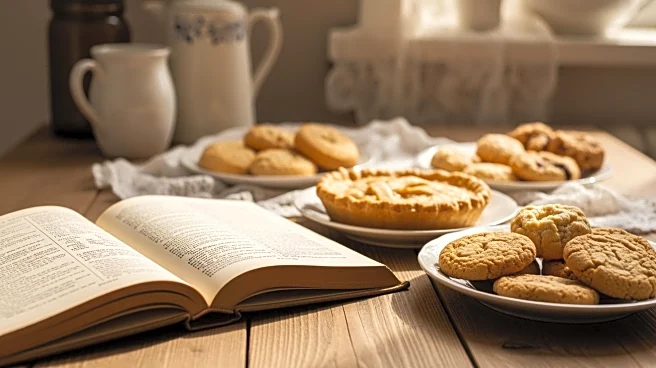
In the late 19th and early 20th centuries, suffragists in America utilized bake sales and cookbooks as a strategic means to fund their campaign for women's voting rights. These activities were not only a source of financial support but also served to strengthen
community ties among women. The recipes, often published in suffragist newspapers like the Woman's Exponent, were challenging to recreate due to their vague instructions and outdated measurements. Despite these challenges, the bake sales were effective in raising funds and awareness. Juli McLoone, curator of the Janice Bluestein Longone Culinary Archive, notes that these efforts were part of a broader strategy to highlight women's roles in both domestic and civic spheres. The cookbooks also included testimonials from supportive governors and cheeky recipes aimed at convincing husbands to support women's suffrage.
Why It's Important?
The use of bake sales and cookbooks by suffragists highlights the innovative strategies employed by women to advance their rights in a society that often marginalized them. By leveraging traditional domestic roles, suffragists were able to challenge stereotypes and demonstrate their capability in both home and public life. This approach not only helped to fund their activities but also shifted public perception, countering the narrative that suffragists were unladylike or neglectful of their familial duties. The success of these efforts underscores the importance of grassroots organizing and the power of community in effecting social change. It also reflects the broader historical context of women's rights movements, where domestic skills were repurposed for political activism.
What's Next?
While the historical context of these bake sales is set in the past, the legacy of such grassroots efforts continues to influence modern advocacy movements. Current women's rights organizations can draw inspiration from these strategies, using community-based initiatives to foster support and drive change. The integration of traditional roles with activism remains relevant, as it allows for a broader engagement with diverse groups. Future campaigns may continue to explore innovative ways to blend cultural practices with advocacy, ensuring that the fight for equality remains dynamic and inclusive.
Beyond the Headlines
The suffragists' use of bake sales and cookbooks also raises questions about the intersection of gender roles and activism. While some suffragists sought to move women out of the kitchen entirely, others embraced these roles as a means of empowerment. This duality reflects ongoing debates about the role of traditional gender norms in modern feminist movements. Additionally, the historical use of food and domesticity as tools for political change highlights the potential for cultural practices to serve as powerful vehicles for advocacy. As society continues to evolve, the lessons from these early suffragists remain pertinent, offering insights into how cultural identity can be harnessed for social progress.