


What's Happening?
Japan's economy experienced a slight growth of 0.1% in the fourth quarter of 2025, narrowly avoiding a technical recession, which is defined as two consecutive quarters of contraction. This growth marks a reversal from the 0.7% contraction in the third
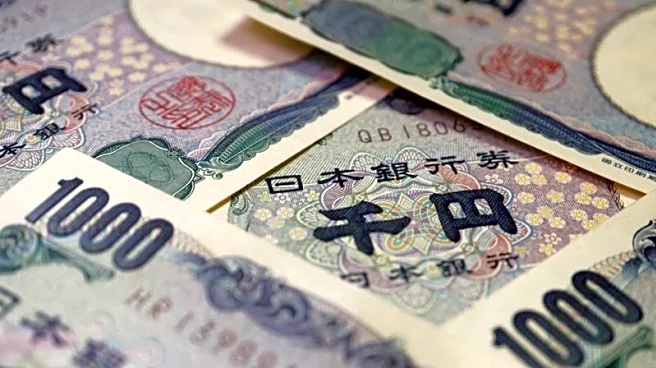
quarter. Despite the positive turn, the growth fell short of the 0.4% expansion anticipated by economists polled by Reuters. On an annualized basis, the economy expanded by 0.2%, which was below the forecasted 1.6% and followed a 2.3% decline in the previous quarter. The modest expansion was primarily driven by private consumption, which helped offset weaknesses in exports and public spending, according to data from Japan's Cabinet Office. Following the release of this data, the Nikkei 225 index saw a slight increase, while the yen weakened against the dollar.
Why It's Important?
The modest growth in Japan's economy is significant as it indicates a slow recovery from previous contractions, highlighting challenges in achieving robust economic expansion. The underwhelming growth figures suggest that Japan's economic recovery is fragile, with private consumption being the primary driver amidst weak exports and public spending. This situation could impact Japan's trade relations, particularly with the U.S., its second-largest trading partner, as they work on a $550 billion investment pledge. The Bank of Japan's forecast for moderate expansion, supported by rising prices and wages, reflects cautious optimism. However, the missed expectations may prompt policymakers to reassess economic strategies to stimulate growth and address underlying weaknesses.
What's Next?
Japan's economic outlook remains uncertain, with potential implications for its trade relations and domestic policy. The Bank of Japan has raised its growth forecast for the fiscal year ending March 2026, indicating expectations of moderate expansion. However, the missed growth targets may lead to increased scrutiny of economic policies and measures to boost growth. The ongoing discussions with the U.S. regarding the $550 billion investment pledge could play a crucial role in shaping Japan's economic future. Stakeholders may need to focus on enhancing private consumption and addressing export weaknesses to ensure sustainable growth.
Beyond the Headlines
The economic data highlights deeper issues within Japan's economy, such as reliance on private consumption amidst weak exports and public spending. This reliance may necessitate structural reforms to diversify growth drivers and enhance economic resilience. The interplay between domestic consumption and international trade relations, particularly with the U.S., could influence Japan's long-term economic strategy. Additionally, the Bank of Japan's optimistic forecast may require careful balancing of monetary policies to support growth without exacerbating inflationary pressures.