
What's Happening?
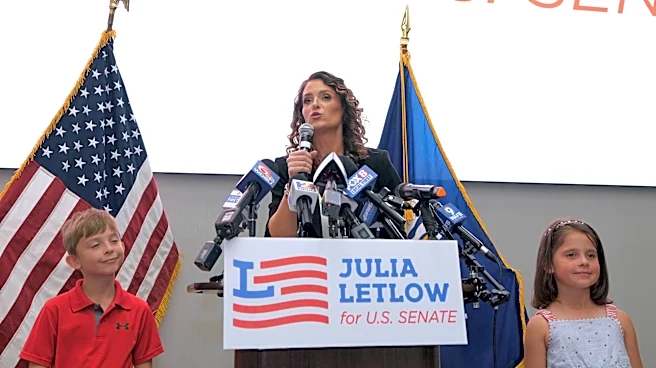
Senator Bill Cassidy, a Republican from Louisiana, recently lost his primary election to Trump-endorsed candidates Julia Letlow and John Fleming. This defeat marks the end of Cassidy's attempts to reconcile
with the Republican base after his 2021 vote to convict President Trump during the second impeachment trial. Despite his loss, Cassidy has seven months left in his Senate term, during which he may act independently of party pressures. His concession speech emphasized the importance of the Constitution and the welfare of all Americans over individual power. Political analysts suggest that Cassidy, now free from electoral concerns, could become a significant obstacle to President Trump's legislative agenda in a narrowly divided Senate.
Why It's Important?
Cassidy's potential shift in political strategy could have significant implications for President Trump's administration. With the Senate divided 53-47, even a single defection could derail key legislative initiatives. Cassidy's newfound freedom may allow him to vote against Trump's priorities, similar to how Senator Thom Tillis acted after announcing he would not seek reelection. This situation could complicate Trump's efforts to pass legislation, especially with ongoing economic challenges and declining approval ratings. Cassidy's actions could also influence other Republican senators who are not aligned with Trump, potentially leading to a coalition that could block or demand changes to Trump's proposals.
What's Next?
In the coming months, Cassidy's actions will be closely watched as he decides how to use his remaining time in the Senate. His role could be pivotal in upcoming votes, particularly if Supreme Court vacancies arise, requiring Senate confirmation. Cassidy's stance may also impact other legislative areas, such as health policy, where he could leverage his position to extract concessions. The dynamics within the Senate will be crucial as President Trump navigates his legislative agenda amidst internal party challenges and external economic pressures.