
What's Happening?
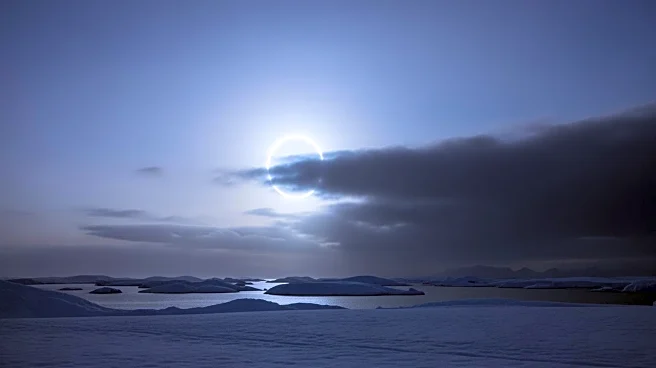
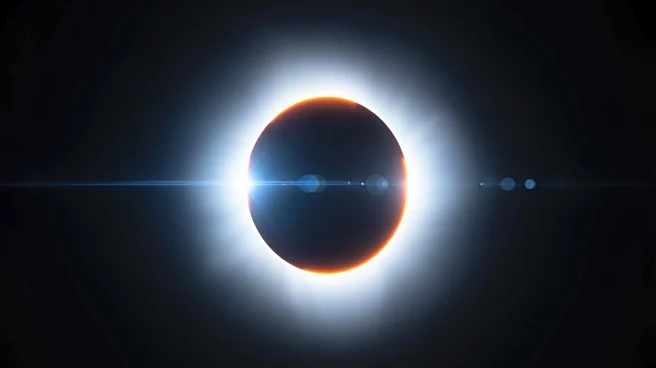
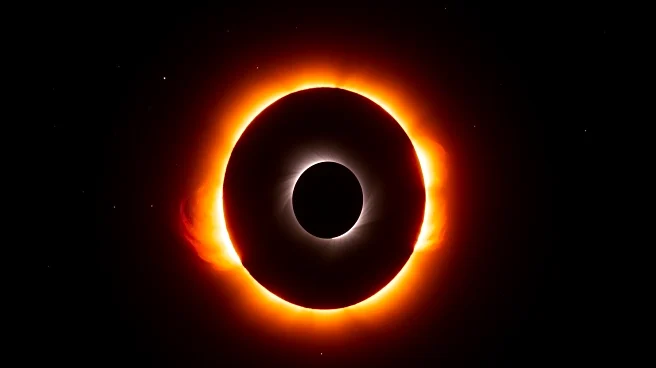
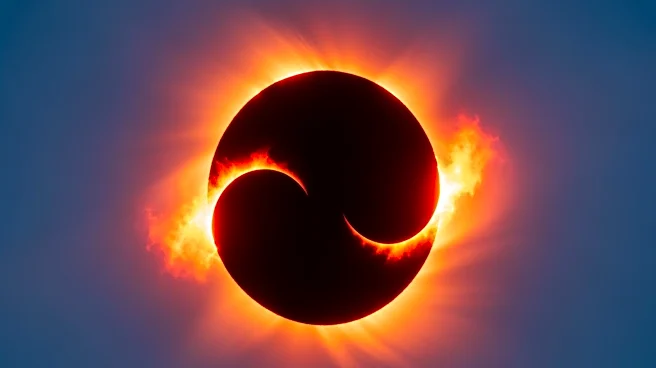
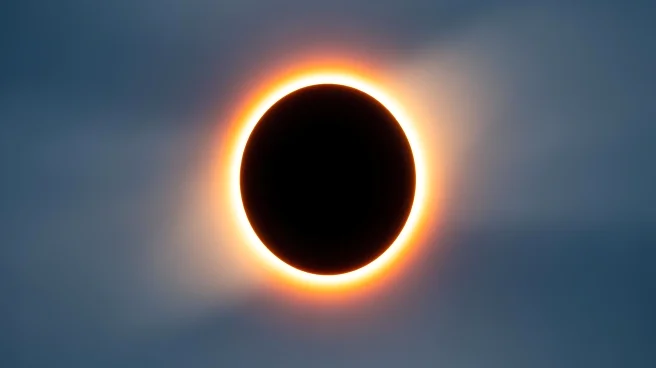
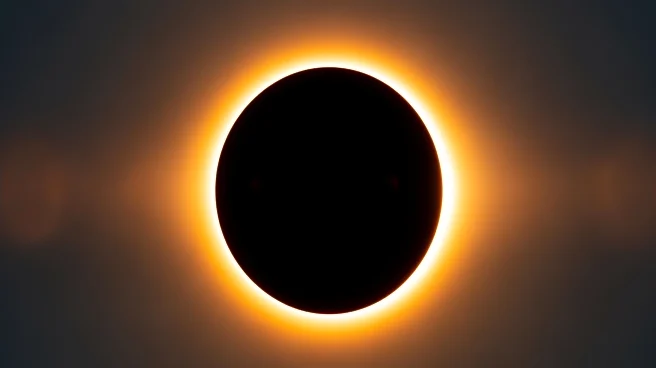
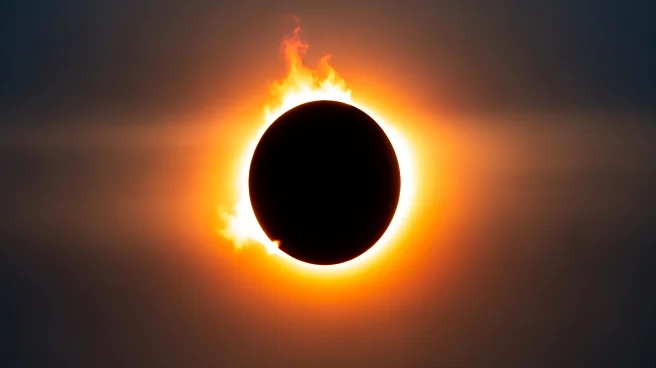
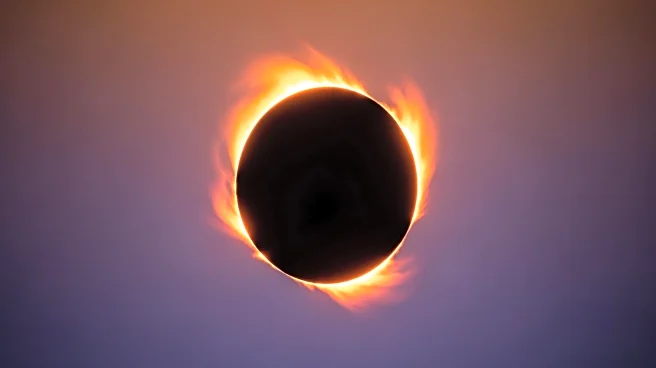
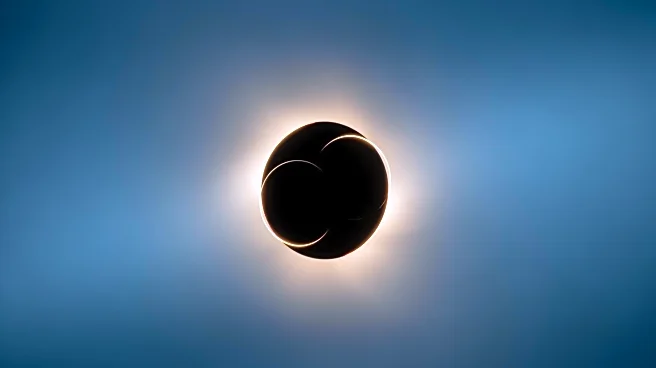
The first solar eclipse of 2026, known as the 'Ring of Fire,' is set to occur on February 17. This annular solar eclipse happens when the Moon is at its farthest point from Earth, creating a bright ring around the Moon as it passes between the Earth and
the Sun. The eclipse will last for up to 2 minutes and 20 seconds, with the maximum eclipse visible in Antarctica and parts of Southern Africa. The event will not be visible from the United States.
Why It's Important?
Solar eclipses are significant for scientific research and public interest. They provide opportunities for astronomers to study the Sun's corona and other solar phenomena. The 'Ring of Fire' eclipse is particularly captivating due to its unique visual effect, drawing interest from both scientists and the general public. Although not visible in the U.S., the event highlights the global nature of astronomical phenomena and the interconnectedness of scientific communities worldwide.
What's Next?
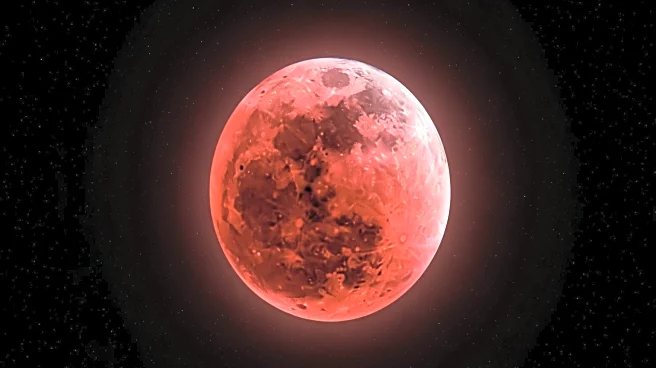
Following this solar eclipse, a lunar eclipse is expected on March 3-4, which will be visible in parts of North America, Australia, and East Asia. These celestial events continue to engage the public and scientific communities, fostering interest in astronomy and space exploration. Future eclipses, such as the one in 2027, will provide further opportunities for observation and study.