


What's Happening?
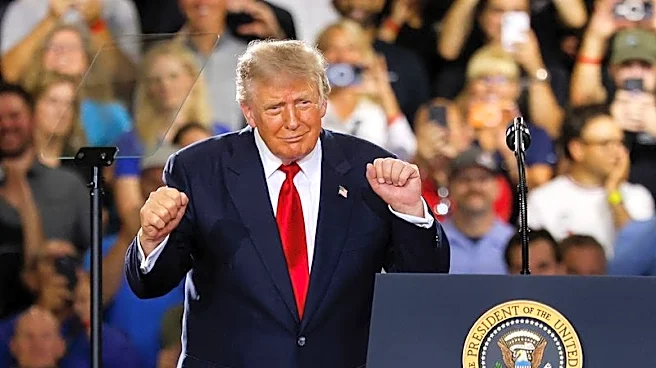
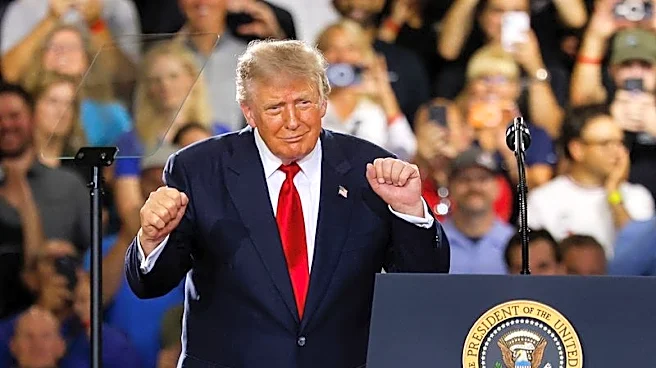
The Republican Party is experiencing a unique situation where internal dissent is minimal despite the unpopularity of its leader, President Trump. Unlike the Democratic Party, which is dealing with significant infighting, the Republicans have managed
to suppress internal disagreements. However, this unity may not be beneficial in the long run, as it limits the party's ability to adapt and address voter concerns. The lack of a moderate faction, similar to the Democrats' Blue Dog caucus, is seen as a disadvantage, particularly in swing states where diverse viewpoints could enhance electoral success.
Why It's Important?
The absence of internal debate within the Republican Party could hinder its ability to respond to changing political dynamics and voter priorities. As the party remains closely aligned with President Trump, it risks alienating moderate voters who are dissatisfied with the current administration. This situation highlights the importance of having a diverse range of voices within a political party to address various voter concerns and adapt to evolving political landscapes. The Republican Party's current strategy may limit its electoral prospects in future elections.
What's Next?
For the Republican Party to remain competitive, it may need to foster a more inclusive environment that encourages diverse viewpoints and addresses voter concerns. This could involve developing a moderate faction that can appeal to swing voters and counterbalance the party's current alignment with President Trump. As the political landscape continues to evolve, the party's ability to adapt and respond to voter priorities will be crucial for its success in upcoming elections.