


What's Happening?
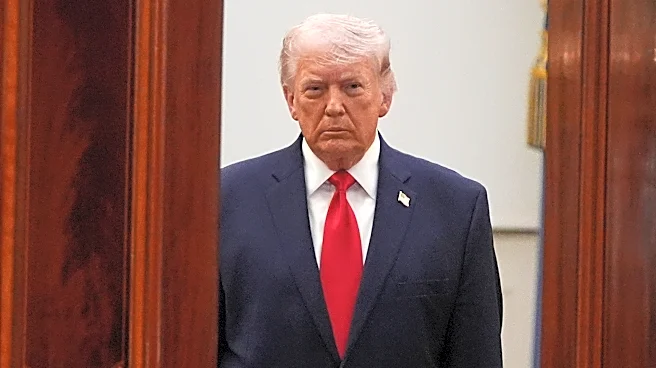
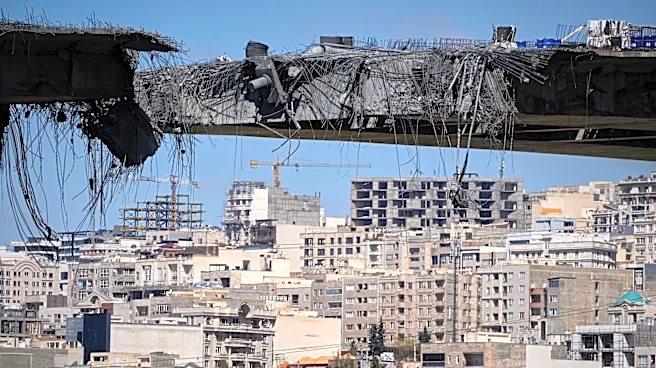
President Trump has indicated the possibility of declaring a unilateral end to the ongoing conflict with Iran, despite not achieving key objectives such as regime change or securing a halt to Iranian attacks. This announcement comes amidst continued missile
launches from Iran, which has vowed to intensify its military operations until it achieves deterrence. Iranian officials have dismissed the notion of effective negotiations and have reiterated their commitment to defending against what they perceive as an unjust war. The potential U.S. withdrawal raises concerns about the future stability of the region, particularly regarding the strategic Strait of Hormuz, a critical global oil transit route.
Why It's Important?
The potential unilateral withdrawal by the U.S. could have significant geopolitical and economic repercussions. A failure to secure freedom of navigation in the Strait of Hormuz could lead to increased Iranian control over this vital waterway, impacting global oil prices and energy markets. Additionally, the withdrawal might embolden hardline elements within Iran, potentially leading to a revival of its nuclear program. The situation also poses risks to U.S. allies in the region, such as Israel and Gulf states, which could face increased threats without a comprehensive peace agreement.
What's Next?
If the U.S. proceeds with a unilateral withdrawal, it may lead to a power vacuum that could be exploited by Iran to consolidate its influence in the region. This could result in heightened tensions and instability, particularly if Iran continues its aggressive military posture. The international community, including U.S. allies, may need to engage in diplomatic efforts to prevent further escalation and to address the broader implications of the conflict.