




What's Happening?
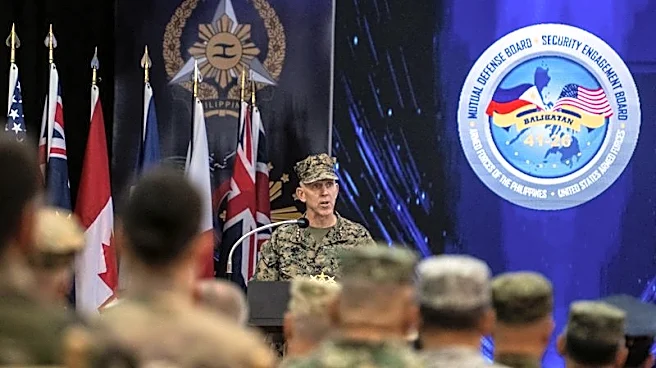
The United States and the Philippines have commenced one of their largest joint military exercises, known as Balikatan, which translates to 'shoulder-to-shoulder.' The drills involve over 17,000 military personnel from both nations, along with new participants
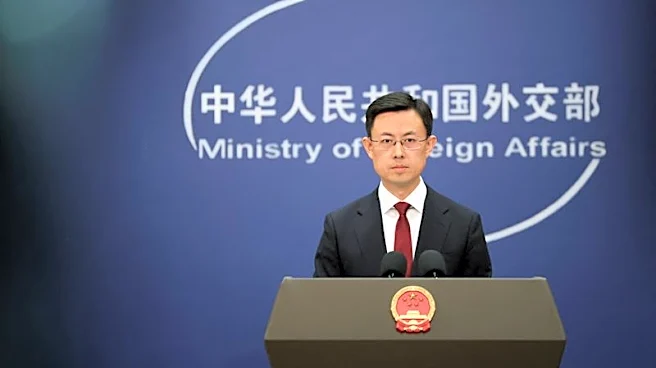
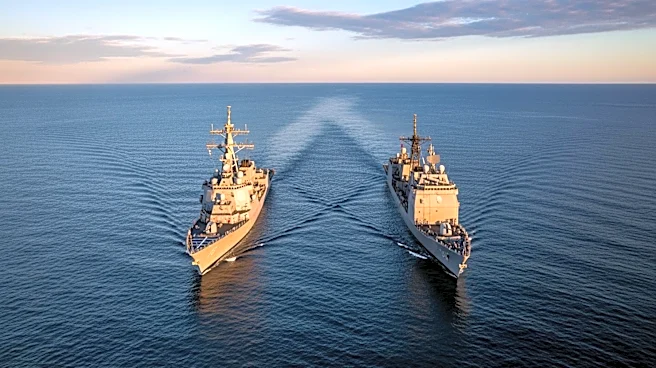
from Japan and Canada. These exercises are designed to enhance military readiness and deterrence against aggression in Asia, particularly in the context of territorial disputes in the South China Sea. Despite objections from China, which views the drills as a containment strategy against its rise, the Philippine military insists the exercises are not targeted at any specific country but are necessary for preparing allied forces to respond to natural disasters. The drills include mock battle scenarios and live-fire maneuvers, with Japanese forces set to fire missiles to sink a mock enemy ship, and U.S. forces deploying marine drones for bombardment.
Why It's Important?
The Balikatan exercises underscore the strategic military partnership between the United States and the Philippines, highlighting Washington's commitment to the Indo-Pacific region despite global challenges. This collaboration is crucial for maintaining regional stability and countering potential threats, particularly from China, which has been assertive in its territorial claims in the South China Sea. The inclusion of Japan and Canada signifies a broader coalition aimed at ensuring free navigation and upholding international law in contested waters. The drills serve as a reminder of the geopolitical tensions in Asia and the importance of military alliances in deterring conflict and promoting peace.
What's Next?
The ongoing military exercises are expected to continue for nearly three weeks, with various scenarios designed to test and improve the capabilities of the participating forces. The drills may lead to increased diplomatic tensions with China, which has already expressed its disapproval. However, the United States and its allies are likely to continue their commitment to regional security and cooperation. Future exercises may involve more countries, further strengthening the network of alliances in the Indo-Pacific region.