



What's Happening?
U.S. Representative George Whitesides, along with Representatives April McClain-Delaney and Andrea Salinas, introduced the Understanding AI in the Classroom Act. This legislation directs the National Science Foundation (NSF) to study the effects of artificial
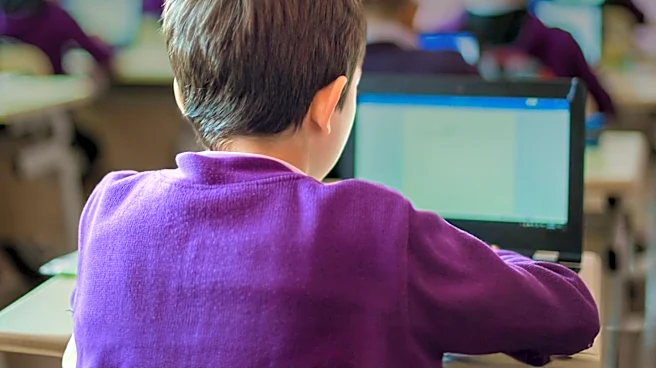
intelligence (AI) on students as schools increasingly adopt AI technologies. The bill aims to address gaps in research regarding AI's impact on children's attention spans, learning independence, and cognitive, social, emotional, and behavioral development. The NSF is tasked with examining how these effects vary based on age, learning disabilities, English-language learner status, and socioeconomic background. The bill comes amid growing concerns from parents and educators about the long-term effects of AI in education, including issues related to screen time and the reliance on AI-generated answers.
Why It's Important?
The introduction of this bill highlights the growing concern over the rapid integration of AI in educational settings without sufficient understanding of its long-term impacts. As AI tools become more prevalent in classrooms for tasks such as tutoring and grading, there is a pressing need for comprehensive research to inform sustainable policies that protect students' development. The legislation seeks to ensure that AI is deployed responsibly in schools, addressing potential negative effects on students' social development and learning processes. This initiative could lead to more informed decisions by educators and policymakers, ultimately shaping the future of AI in education.
What's Next?
If passed, the NSF will convene experts to conduct the necessary research, potentially influencing future educational policies and practices. The findings could lead to the development of guidelines for the responsible use of AI in classrooms, ensuring that technology enhances rather than hinders student learning. The bill's progress will be closely watched by educational institutions, policymakers, and technology developers, as it could set a precedent for how AI is integrated into educational systems nationwide.