



What's Happening?
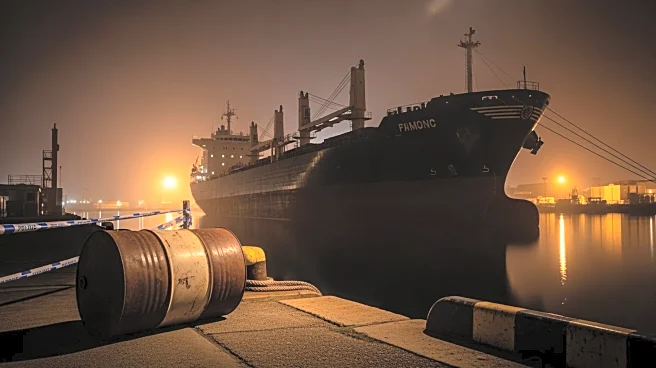
Myanmar's military government is reportedly using 'ghost ships' to import aviation fuel, evading international sanctions. According to Amnesty International, these ships disable their tracking systems to avoid detection, allowing the military to continue
air attacks in the ongoing civil war. The report highlights a significant increase in aviation fuel imports in 2025, despite sanctions led by the U.S. and Britain. The military's reliance on evasive shipping tactics mirrors those used by sanctioned nations like Iran and North Korea.
Why It's Important?
The use of 'ghost ships' by Myanmar's military underscores the challenges of enforcing international sanctions. This tactic allows the military to sustain its air campaign, contributing to civilian casualties and prolonging the conflict. The situation raises questions about the effectiveness of current sanctions and the need for more robust international measures. It also highlights the role of global shipping networks in facilitating or hindering the enforcement of sanctions.
What's Next?
Amnesty International calls for a ban on shipping aviation fuel to Myanmar and urges companies involved in the supply chain to withdraw. The international community may consider tightening sanctions or exploring new diplomatic avenues to pressure Myanmar's military. The ongoing conflict and humanitarian crisis in Myanmar remain a concern for regional stability and international human rights organizations.