



What's Happening?
The 2026 Atlantic hurricane season, which began on June 1, is predicted to be below normal, largely due to the effects of El Nino. The National Oceanic and Atmospheric Administration (NOAA) forecasts between eight and 14 named tropical storms, with three
to six potentially becoming hurricanes. El Nino, characterized by warmer Pacific Ocean temperatures, is expected to suppress hurricane formation in the Atlantic. Despite the forecast, meteorologists caution that even a single storm can have significant impacts. The Madden Julian Oscillation, another global weather pattern, may influence conditions in the Atlantic, potentially making them more conducive to storm formation later in June.
Why It's Important?
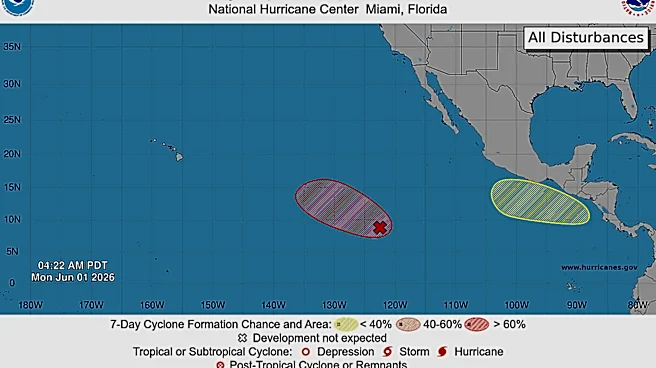
The prediction of a below-normal hurricane season is significant for regions along the Atlantic coast, including the Gulf of Mexico, which are vulnerable to hurricanes. A reduced number of storms could mean less risk of damage and economic loss for these areas. However, the presence of El Nino also suggests increased storm activity in the Pacific, which could affect regions like Hawaii. The forecast highlights the importance of preparedness, as the unpredictability of weather patterns means that even a below-normal season can still produce devastating storms.
What's Next?
As the season progresses, NOAA and other weather agencies will continue to monitor atmospheric conditions and update forecasts. Residents in hurricane-prone areas are encouraged to remain vigilant and prepared for potential storms. The influence of the Madden Julian Oscillation will be closely watched, as it could alter the current forecast by making conditions more favorable for storm development. The ongoing monitoring will be crucial in providing timely warnings and ensuring public safety.