




What's Happening?
The ongoing war in the Persian Gulf is causing significant disruptions in global agriculture, particularly affecting fertilizer prices and planting decisions. The Indian Council of Agricultural Research and ICRISAT are collaborating to develop strategies
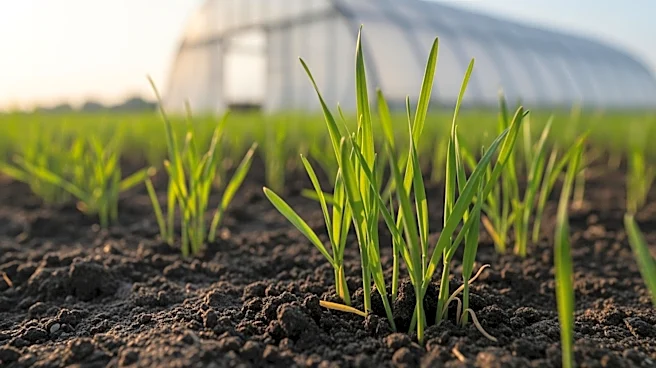
to address these challenges. The crisis highlights the need for agricultural systems that are less dependent on external inputs and more resilient to geopolitical shocks. Innovations such as crop diversification, precision nutrient management, and bioethanol production from sorghum are being explored to enhance food security and reduce reliance on imported fertilizers.
Why It's Important?
The war in Iran is exacerbating vulnerabilities in global agriculture, emphasizing the need for innovative solutions to buffer against external shocks. By focusing on crop diversification and efficient resource use, countries can reduce dependence on imported inputs and strengthen food security. These strategies are crucial for regions like Africa and Asia, where exposure to global market volatility is high. Agricultural innovation offers a pathway to build resilience and ensure sustainable food production in the face of geopolitical challenges.
What's Next?
ICRISAT and its partners will continue to develop and implement strategies to enhance agricultural resilience. Efforts will focus on expanding crop diversification, improving input efficiency, and integrating energy and agriculture systems. Collaboration across countries and regions will be essential to share knowledge and scale solutions. These initiatives aim to transform agriculture into a source of stability and security in an increasingly uncertain global environment.