





What's Happening?
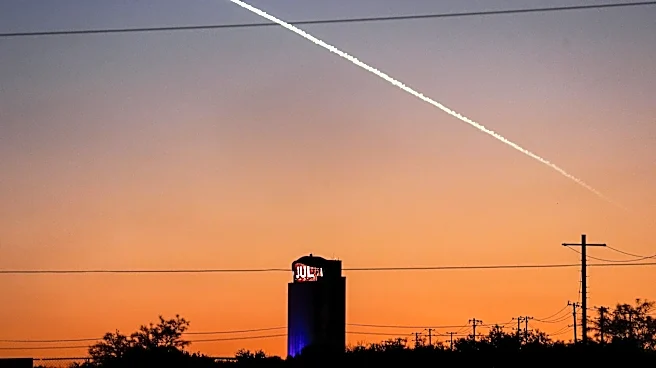
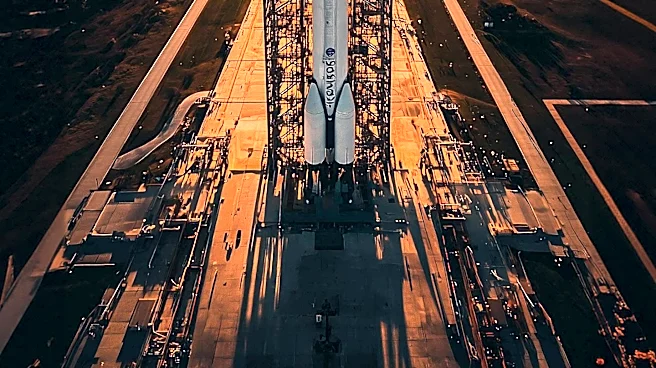
SpaceX successfully launched its third classified U.S. Space Force mission, designated USSF-385, from Vandenberg Space Force Base in California. The Falcon 9 rocket lifted off on Saturday morning, marking the third such classified launch from the base
within a 16-day period. As is customary for national-security missions, details regarding the payloads, activities, and destination of USSF-385 have not been publicly disclosed. SpaceX concluded its launch webcast shortly after the first-stage booster successfully landed on the 'Of Course I Still Love You' droneship in the Pacific Ocean, approximately 8.5 minutes after liftoff. This was the booster's tenth flight and landing. The previous classified Space Force launches from Vandenberg were USSF-153 on September 10 and USSF-259 on September 16. While not officially confirmed by the Space Force, Spaceflight Now reported that USSF-385 is believed to be part of a series deploying Starshield satellites for government use.
Why It's Important?
This series of classified launches underscores the escalating importance of space in U.S. national security and defense planning. The rapid succession of missions highlights a concerted effort to deploy and enhance national-security assets in orbit, which are crucial for military communications, intelligence gathering, missile warning systems, and navigation. SpaceX's expanding role in these critical U.S. national-security space missions signifies a growing reliance on private sector innovation and capabilities for governmental defense objectives. This trend is particularly significant in the context of increasing global competition, especially with China and Russia, where space dominance is becoming a key strategic advantage. The continuous deployment of such systems ensures the U.S. maintains its technological edge and operational readiness in the space domain, directly impacting its ability to project power and protect national interests.
What's Next?
The U.S. Space Force and SpaceX are expected to continue their collaboration on future classified missions, further integrating private aerospace capabilities into national defense infrastructure. The ongoing deployment of systems like the rumored Starshield satellites will likely enhance the U.S.'s capabilities in space-based intelligence, surveillance, and reconnaissance. This sustained activity will also drive further innovation in reusable rocket technology, as demonstrated by the Falcon 9 booster's tenth successful landing. The lack of public disclosure for these missions suggests a continued emphasis on operational security, which will likely remain a standard practice for sensitive national-security launches. The broader implications include a continued arms race in space, with other nations likely to accelerate their own space defense programs in response to perceived advancements by the U.S.
Beyond the Headlines
The increasing frequency of classified space missions by the U.S. Space Force, in partnership with private entities like SpaceX, reflects a fundamental shift in military strategy and the nature of modern warfare. Space is no longer merely a domain for scientific exploration but a critical theater for national security, intelligence, and defense. This development raises complex questions about transparency, accountability, and the militarization of space. The reliance on private companies for such sensitive operations blurs the lines between commercial and governmental interests, potentially leading to new regulatory and ethical challenges. Furthermore, the secrecy surrounding these missions, while necessary for national security, can fuel international speculation and contribute to an environment of mistrust, potentially escalating tensions in the global space arena. The long-term implications include the establishment of new norms for space conduct and the potential for future conflicts to extend beyond Earth's atmosphere.