





What's Happening?
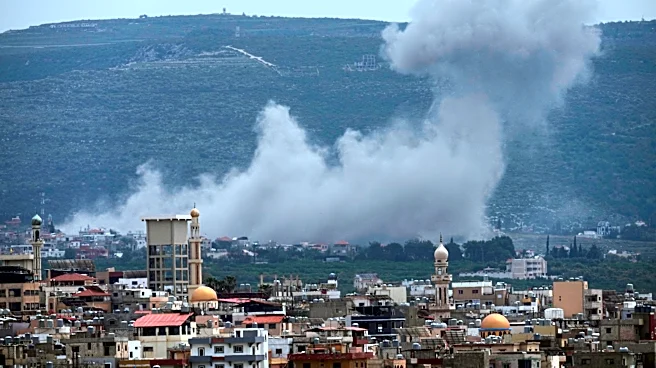
President Donald Trump announced a 10-day ceasefire between Israel and Lebanon, set to begin at midnight local time. This truce follows discussions with Israeli Prime Minister Benjamin Netanyahu and Lebanese President Joseph Aoun. The ceasefire aims to pave
the way for broader peace talks and security arrangements. Despite the ceasefire, Israeli Defense Forces (IDF) remain stationed in southern Lebanon, maintaining defensive positions. The ceasefire terms require Lebanon to prevent attacks by groups like Hezbollah, while Israel retains the right to self-defense but must refrain from offensive operations during the truce.
Why It's Important?
The ceasefire is significant as it represents a potential step towards lasting peace in a region marked by decades of conflict. It opens diplomatic channels between Israel and Lebanon, which have been largely closed for over 40 years. The truce could stabilize the region, reducing the risk of further military escalation and its associated humanitarian impacts. For the U.S., facilitating this agreement enhances its diplomatic influence in the Middle East. However, the situation remains fragile, with the potential for renewed hostilities if the ceasefire terms are violated.
What's Next?
The ceasefire may be extended if both parties agree, and President Trump has invited Netanyahu and Aoun to Washington for further discussions. The success of the ceasefire will depend on Lebanon's ability to control Hezbollah and prevent attacks on Israel. The IDF's continued presence in southern Lebanon suggests that Israel is prepared for potential violations. The international community will likely monitor the situation closely, with diplomatic efforts focused on achieving a more permanent resolution.