








What's Happening?
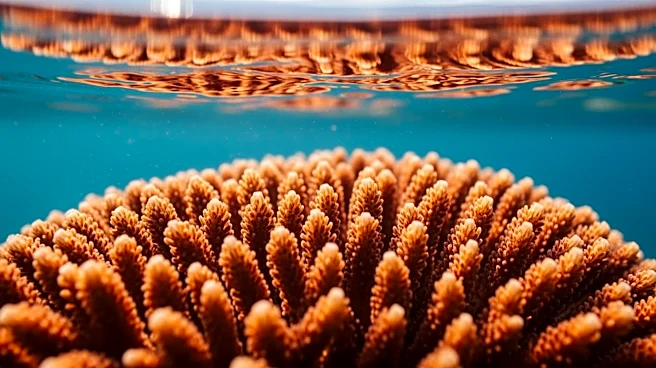
A collaborative study by the Wildlife Conservation Society and Macquarie University, supported by the Bloomberg Ocean Initiative, has identified approximately 166,000 square kilometers of coral reefs across 71 countries that have the potential to withstand
or recover from the effects of global warming. These climate-resilient reefs are located in regions such as Australia, the Bahamas, Cuba, Indonesia, and the Philippines. The study highlights the uneven but widespread distribution of these refugia, which are areas of relatively unaltered climate that provide a haven for marine life during periods of climatic change. The research emphasizes the opportunity for global efforts to focus on policies and conservation actions that can sustain coral reef futures. The study is based on a mapping tool developed using over 45,000 field observations from 1960 to the present, projecting the extent of damage to reefs by 2050 under a global temperature increase of 2.1°C relative to pre-industrial levels.
Why It's Important?
Coral reefs, covering less than 1% of the ocean floor, support about 25% of all marine life and provide natural coastline protection and food for coastal communities. The potential disappearance of these ecosystems by 2050 due to marine heatwaves and coral bleaching poses a significant threat to biodiversity and human livelihoods. The identification of climate-resilient reefs offers a critical opportunity to mobilize conservation efforts and protect these vital ecosystems. The study's findings could guide strategic investments in conservation finance and management actions, potentially preserving the ecological and economic benefits that coral reefs provide. This research challenges the narrative that coral reefs are beyond saving, offering hope for their survival and recovery.
What's Next?
The study calls for global efforts to strategically focus on policies and conservation actions that are most likely to sustain coral reef futures. This includes mobilizing conservation finance and management actions to protect the identified climate-resilient reefs. The research suggests that international collaboration and targeted conservation strategies could enhance the resilience of coral reefs to climate change. Additionally, the study highlights the need for continued exploration of heat-tolerant corals and addressing nutrient imbalances in ocean waters to support coral health. The findings could influence future conservation policies and initiatives aimed at preserving coral reefs and their associated ecosystems.
Beyond the Headlines
The study underscores the importance of addressing nutrient imbalances in ocean waters, which contribute to coral degradation. Researchers emphasize the need for communities to tackle issues such as septic overflows and inefficient stormwater filtration to improve water quality and support coral health. The research also highlights the potential of technological innovations, such as 3D modeling and underwater imaging, to enhance coral monitoring and conservation efforts. These advancements could provide critical insights into reef health and recovery, supporting more effective conservation strategies. The study's findings could lead to a shift in how coral conservation is approached, emphasizing resilience and adaptation in the face of climate change.