

What's Happening?
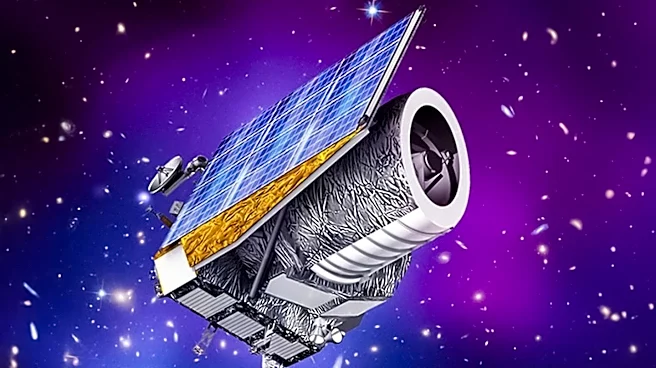
NASA has announced that the Probe far-Infrared Mission for Astrophysics (PRIMA) is moving into Phase B of its development. This mission represents the first in a new class of astrophysics missions, known as Probe Explorers, within NASA's established Explorers Program.
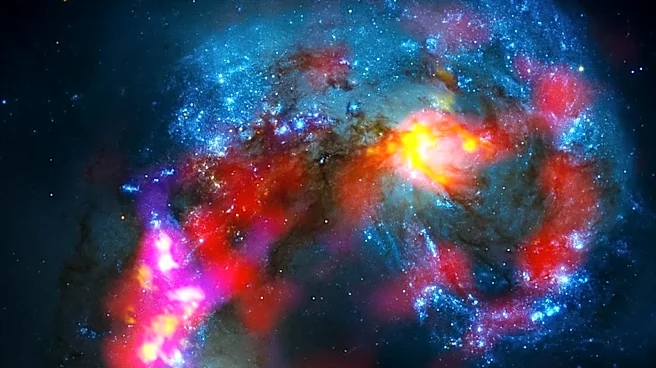
PRIMA is designed to conduct deep and sensitive surveys of the universe using far-infrared light. The mission aims to bridge the observational gap between existing infrared observatories, such as the James Webb Space Telescope, and radio telescopes. By focusing on radiant energy detectable only in the far-infrared spectrum, PRIMA will investigate a broad range of cosmic questions. These include the origins of exoplanets, the growth and evolution of galaxies and their black holes throughout cosmic history, and the accumulation of dust and heavy elements in the universe over time. The project cost for PRIMA is capped at $1.2 billion, excluding launch and other non-project expenses. If confirmed, the observatory is slated for a 2033 launch, with a planned mission duration of five years. The decision to advance PRIMA follows a detailed evaluation of concept studies for Probe Explorer missions, assessing their scientific merit, alignment with Decadal Survey recommendations, feasibility of development within cost and schedule, and the use of technologies that could support future large missions.
Why It's Important?
The advancement of the PRIMA mission is significant for U.S. astrophysics and space exploration, as it marks the initiation of a new class of missions recommended by the National Academies of Sciences, Engineering, and Medicine's 2020 Decadal Survey. This new class, Probe Explorers, is intended to provide frequent, lower-cost access to space for scientific investigations. PRIMA's unique capability to survey the universe in far-infrared light will offer an unprecedented view into cosmic phenomena that are currently difficult to observe. This will enhance our understanding of fundamental questions about the universe's origins and evolution, including how planets form outside our solar system and the development of galaxies and black holes. The mission's findings will complement data from other major observatories, creating a more comprehensive picture of the cosmos. Furthermore, the development of PRIMA supports the U.S. space industry by fostering technological innovation and providing opportunities for collaboration among NASA centers and international partners. The successful execution of this mission could solidify the U.S.'s leadership in space science and inspire future generations of scientists and engineers.
What's Next?
PRIMA will now proceed with Phase B of its development, which involves advancing the preliminary design and technology development for the mission. This phase will be followed by a confirmation review, where the mission's readiness will be assessed based on technical, programmatic, and cost performance. If the review is successful, PRIMA will move into Phase C, leading towards its planned launch in 2033. During this period, NASA's Jet Propulsion Laboratory will manage the mission, with contributions from NASA's Goddard Space Flight Center and Marshall Space Flight Center. International partners, including CNES, ASI, DLR, CSA, KASI, JAXA, and the UK Space Agency, will also contribute to the mission's development. The scientific community will be closely watching the progress, as PRIMA is expected to provide crucial data that will inform future astrophysical research and potentially lead to new discoveries about the universe. The mission's success will also influence the future direction and funding of subsequent Probe Explorer missions.
Beyond the Headlines
The establishment of the Probe Explorers mission class, exemplified by PRIMA, signifies a strategic shift in NASA's approach to astrophysics, emphasizing a balance between large-scale flagship missions and more frequent, cost-effective investigations. This approach could lead to a more dynamic and responsive scientific exploration program, allowing for quicker adaptation to new discoveries and technological advancements. Ethically, the mission underscores humanity's continuous quest for knowledge and understanding of our place in the universe, pushing the boundaries of scientific inquiry. The international collaboration involved in PRIMA highlights the global nature of scientific endeavor and the shared human interest in exploring space. Long-term, the data collected by PRIMA could fundamentally alter our cosmological models and theories, potentially revealing unknown aspects of cosmic evolution and the conditions necessary for planetary formation. This could have profound implications for astrobiology and the search for life beyond Earth, even if indirectly, by refining our understanding of exoplanetary environments.