







What's Happening?
The U.S. Army has been actively enhancing its drone warfare capabilities through Project Flytrap, a NATO exercise conducted in Lithuania. This initiative, now in its fifth iteration, involves the 2nd Cavalry Regiment working alongside international partners
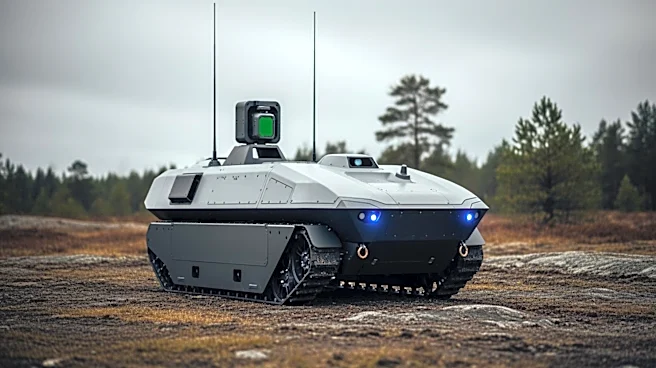
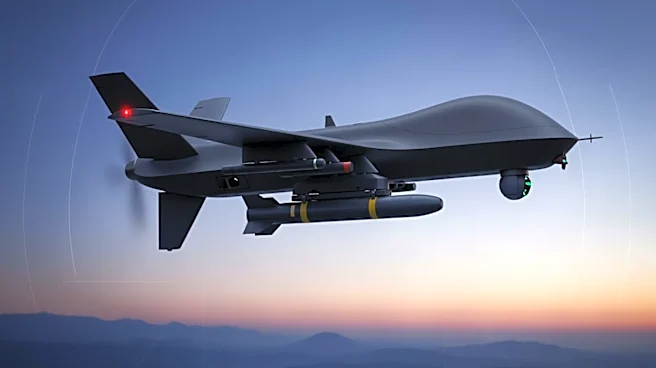
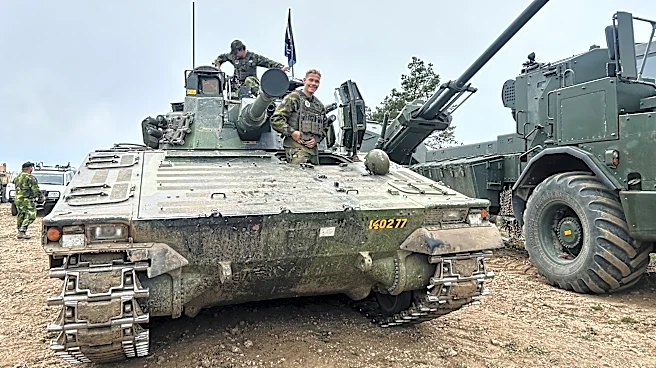
to integrate drone warfare into their ground-combat operations. The exercise tested over 20 pieces of equipment, including Strykers and unmanned ground vehicles, to develop new tactics, techniques, and procedures for countering unmanned aerial systems (UAS). Soldiers utilized reconnaissance drones, first-person view attack drones, jammers, and AI-enabled systems to identify and target enemy drones. The exercise emphasized the importance of understanding battlefield architecture and the synergy between intelligence collection, fire elements, and maneuvering forces.
Why It's Important?
The expansion of drone warfare capabilities is crucial for modern military operations, as drones play an increasingly significant role in both offensive and defensive strategies. By developing advanced counter-UAS tactics, the U.S. Army aims to enhance its ability to protect troops and assets from aerial threats. This initiative reflects a broader trend in military strategy, where technological advancements are integrated into traditional combat roles. The successful implementation of these tactics could provide the U.S. military with a strategic advantage, ensuring better protection and operational efficiency in conflict zones. Additionally, the collaboration with NATO partners strengthens international military alliances and enhances collective security measures.
What's Next?
Future iterations of Project Flytrap are expected to scale up in complexity and scope. The next phase, Flytrap 6.0, will likely involve larger units and more sophisticated scenarios, incorporating a realistic enemy using advanced UAS and electronic warfare. This progression aims to create a multi-layered counter-UAS approach, providing comprehensive training for friendly forces. The continuous development of these exercises will contribute to the U.S. Army's readiness to address emerging threats and adapt to the evolving landscape of modern warfare.